
Starter
For freelancers and small teams.
$ 24 /mo
Billed monthly · cancel anytime
Platforms3
Accounts10


Used by the world's leading companies








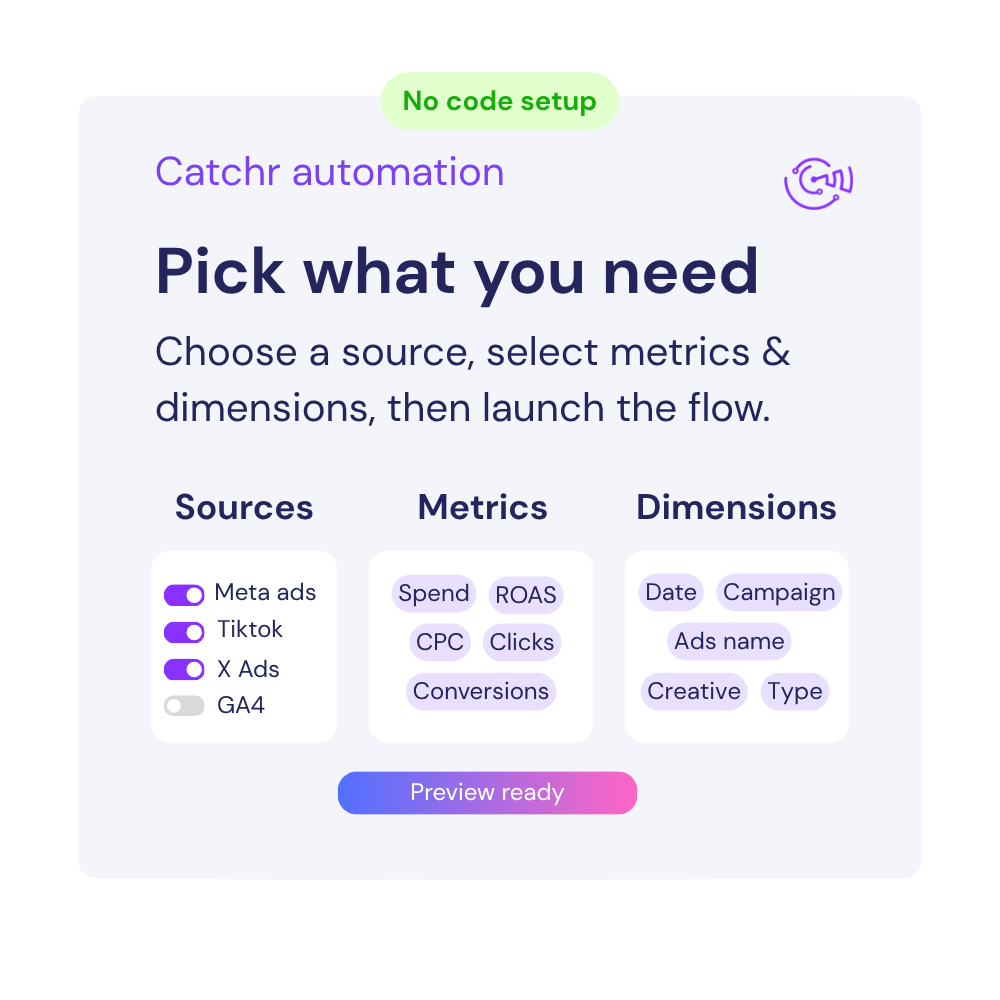
Available metrics
Available dimensions


What our customers say about us.
After three years of use, Catchr has become essential for both our teams and our clients. So far, it has been our best solution for compiling and analyzing data from different advertising platforms. It’s easy to set up, and the customer service is responsive and excellent.

With Catchr’s automated API, we can finally collect and centralize all advertising data, connect it with booking information, and calculate the real ROAS for our restaurant clients. It gives them full visibility, more autonomy, and the ability to optimize campaigns to maximize ROI.

The solution is a real game changer, providing optimal time savings for our data reporting. The major strength of the solution is their highly responsive and professional support.

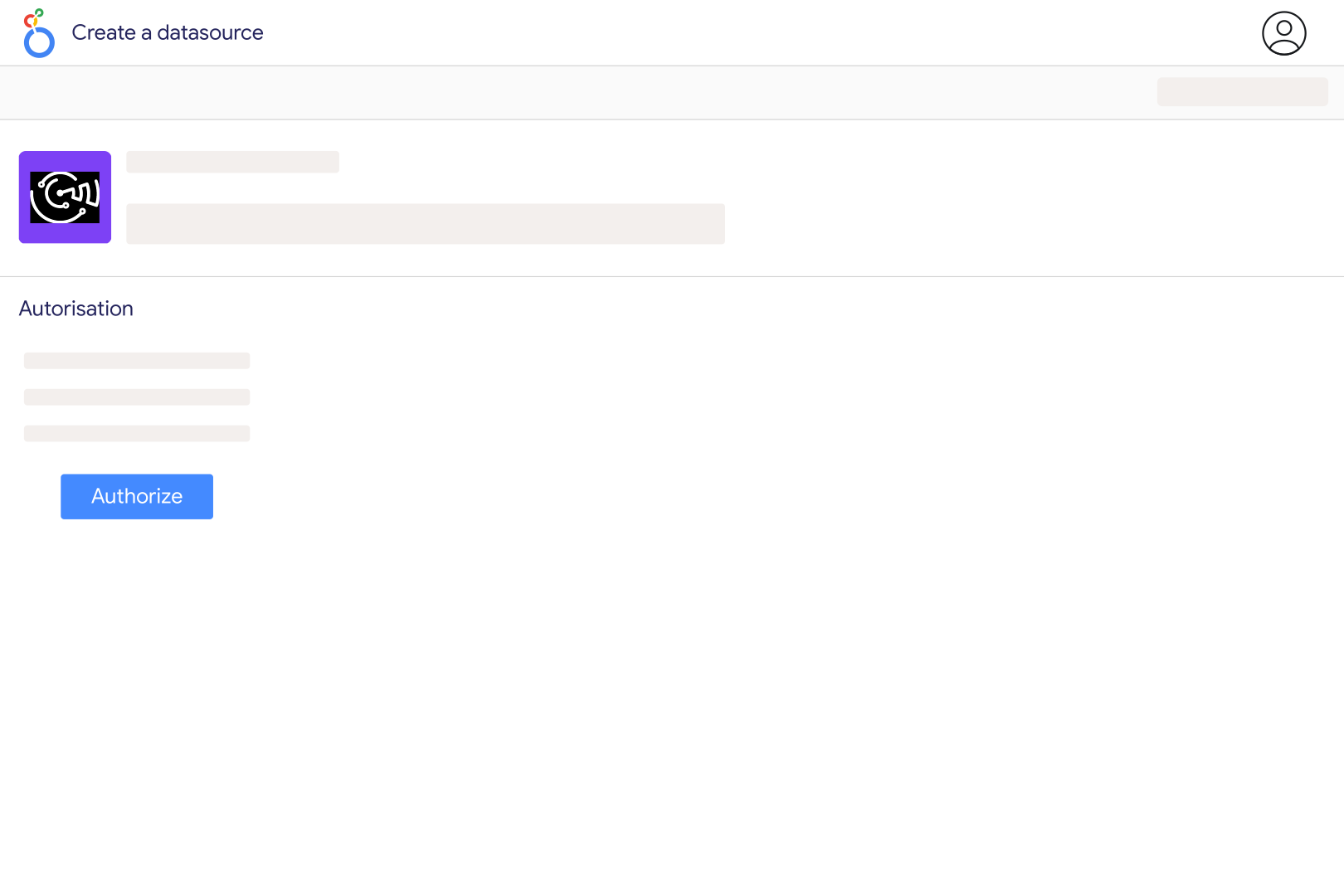
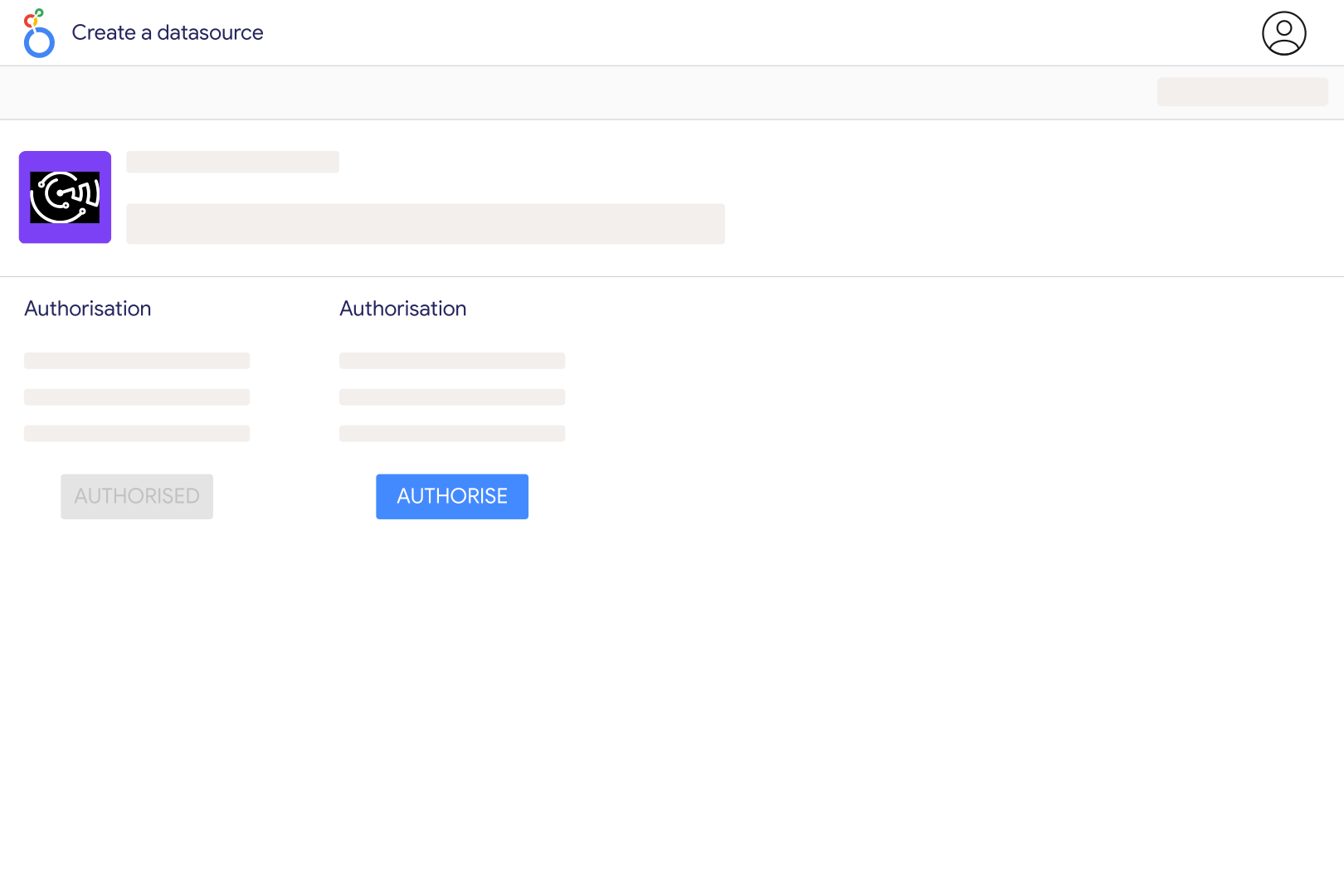
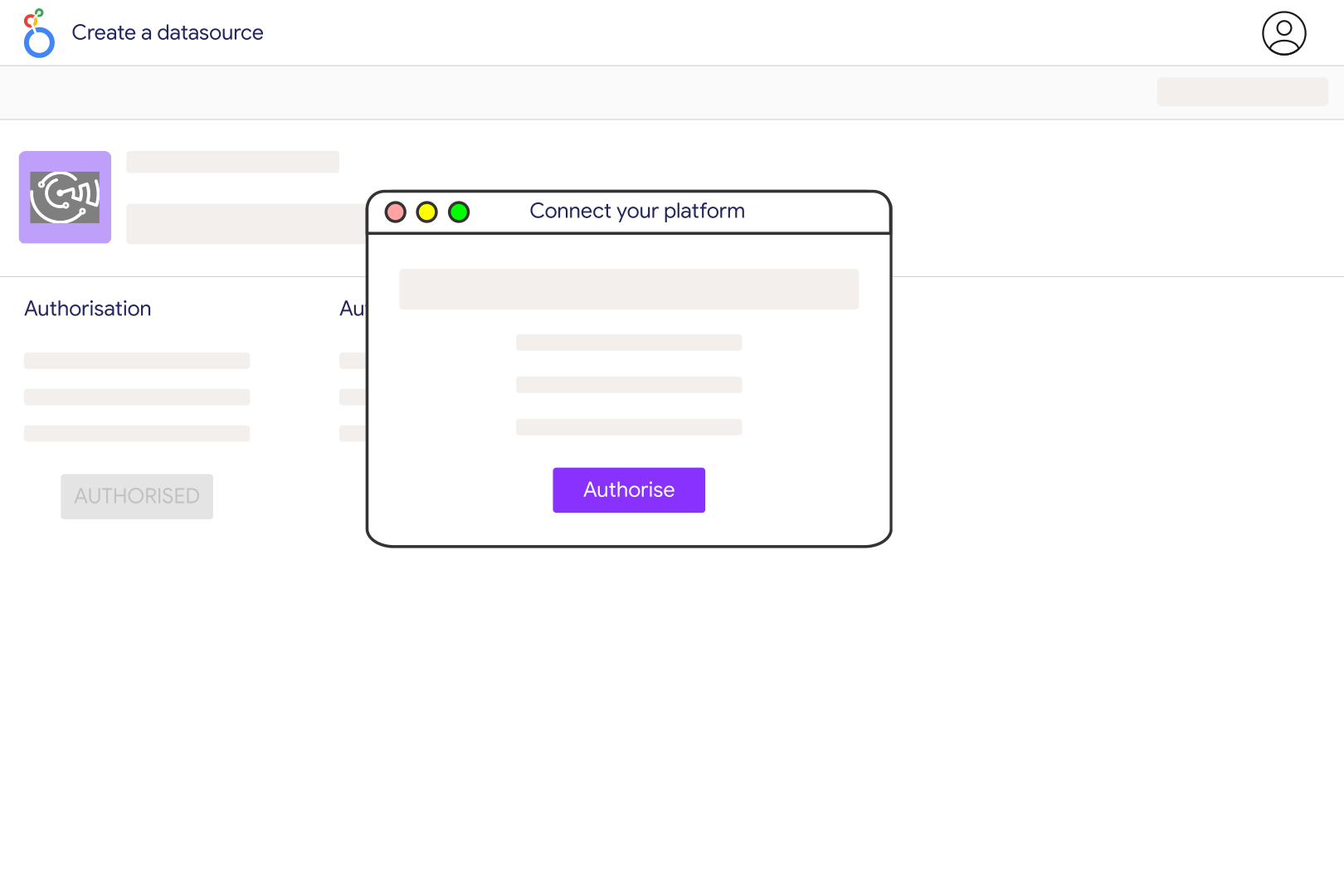
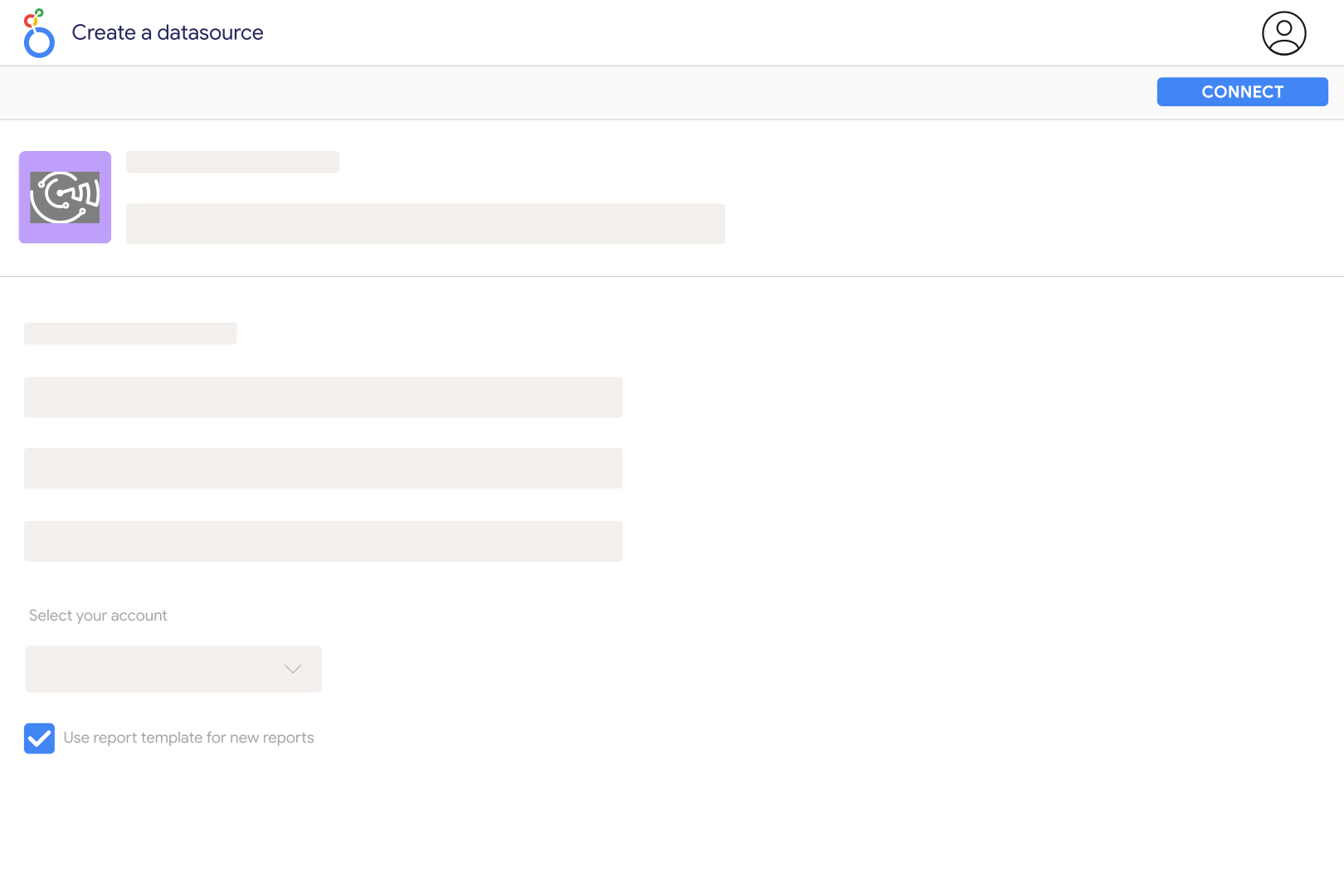
Connect your PrestaShop store to Catchr with the store URL and the access token requested during setup. Make sure the token can read the store resources needed for reporting. Then open the Catchr PrestaShop connector in Looker Studio, authorize Google, select your source, and create a dashboard.
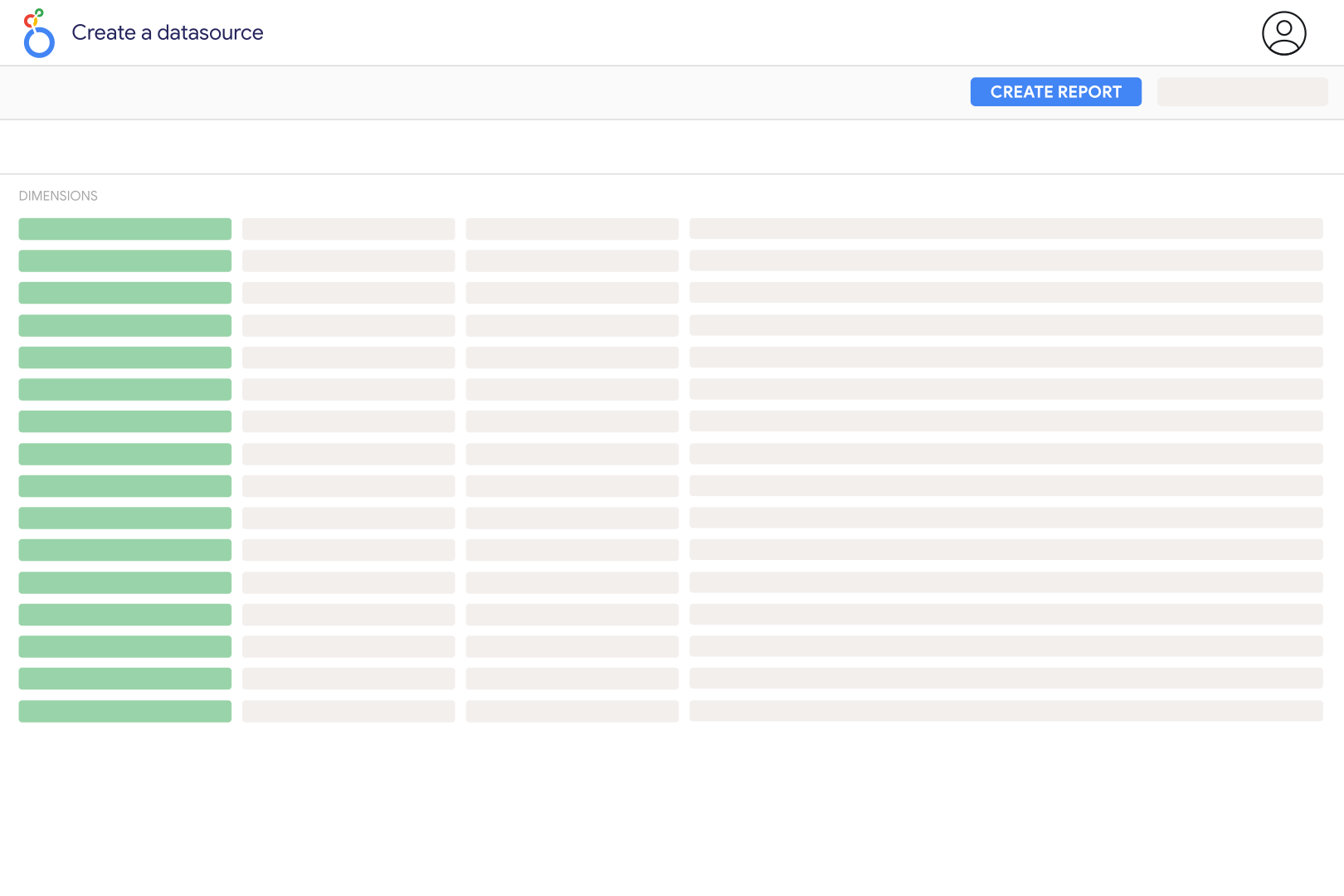
Catchr exposes orders, order items, and customer fields. Available reporting fields include order references, dates, current state, payment method, product quantities, discounts, shipping, and totals with or without tax. Begin with one row per order for store performance, then use order-item fields for product analysis.
Yes. The connector includes tax-exclusive and tax-inclusive order totals, along with separate discount and shipping fields. Choose the definition that matches your reporting goal and use it consistently. Product totals and the amount paid for an order are different measures, so adding shipping or discounts again can produce an incorrect result.
An order can contain several order items, so a table grouped by product may repeat the same order information. Count distinct order IDs for an order count and avoid summing the full order total once per item. Check blends as well: joining several customer or product rows to one order can multiply its value.
Order and customer fields include shop and shop-group IDs, which can help separate records returned from a multistore setup. Confirm that the connected access token can read the shops you need, then filter or group by shop ID. Do not assume that connecting one store automatically grants access to every shop in the installation.
Compare the same shop, currency, order states, and dates first. Order creation, update, invoice, and delivery dates are different fields, and totals may include or exclude tax and shipping. Check how the back-office report handles cancelled orders and refunds before comparing it with a sum of order records.
Yes. Add Google Analytics 4 to compare store orders with tracked traffic and ecommerce events. Align dates and currencies, and validate transaction identifiers before joining purchase data. PrestaShop records store orders, while GA4 depends on website tracking, so their purchase counts can differ.
Our team is always here to answer any questions you may have about our data connector.