Starter
For freelancers and small teams.
$ 24 /mo
Billed monthly · cancel anytime
Platforms3
Accounts10


Used by the world's leading companies








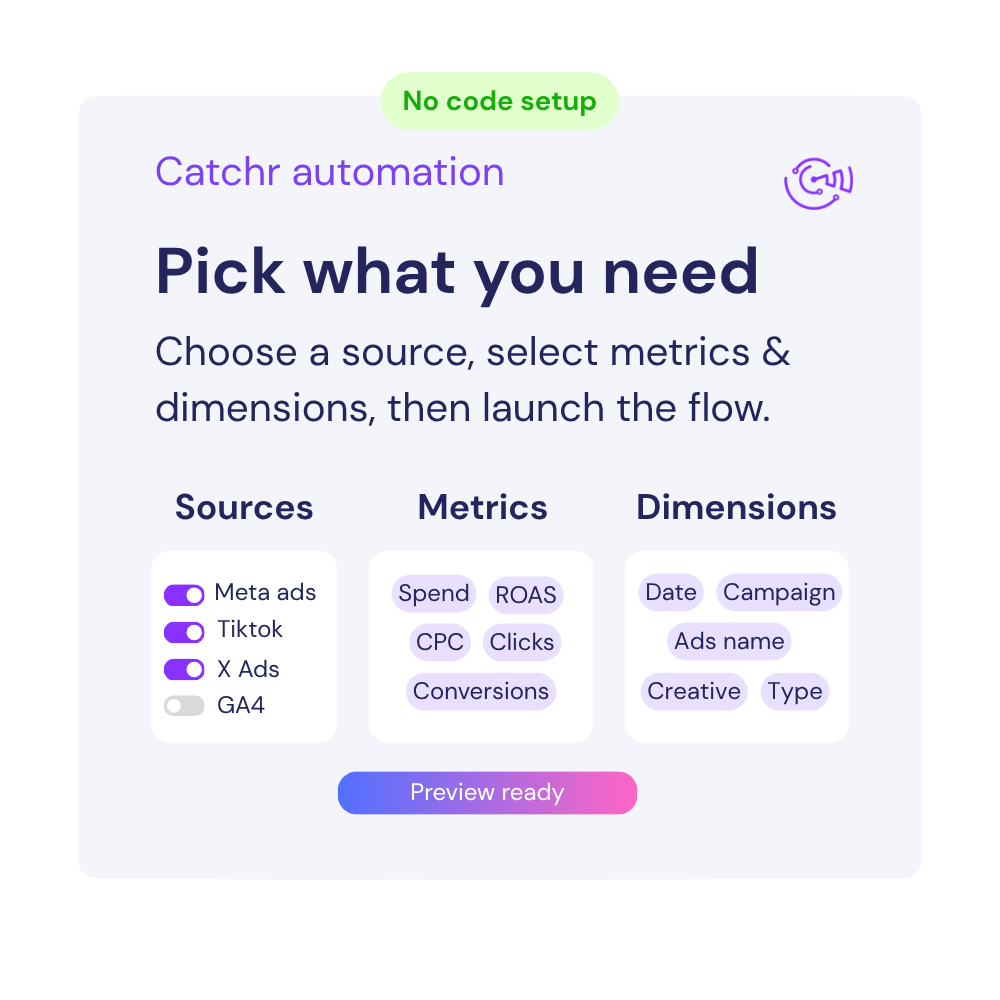
Available metrics
Available dimensions


What our customers say about us.
After three years of use, Catchr has become essential for both our teams and our clients. So far, it has been our best solution for compiling and analyzing data from different advertising platforms. It’s easy to set up, and the customer service is responsive and excellent.

With Catchr’s automated API, we can finally collect and centralize all advertising data, connect it with booking information, and calculate the real ROAS for our restaurant clients. It gives them full visibility, more autonomy, and the ability to optimize campaigns to maximize ROI.

The solution is a real game changer, providing optimal time savings for our data reporting. The major strength of the solution is their highly responsive and professional support.

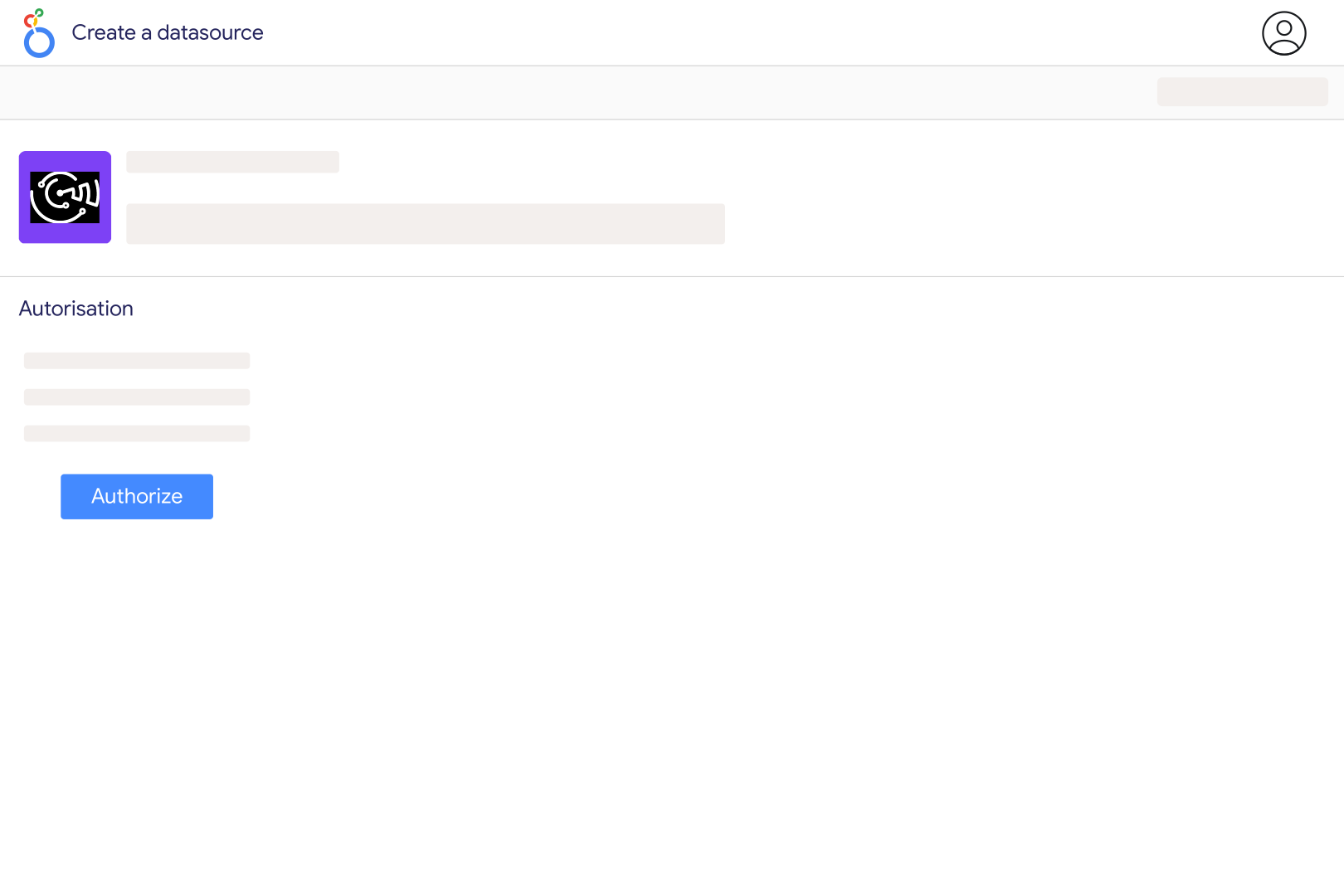
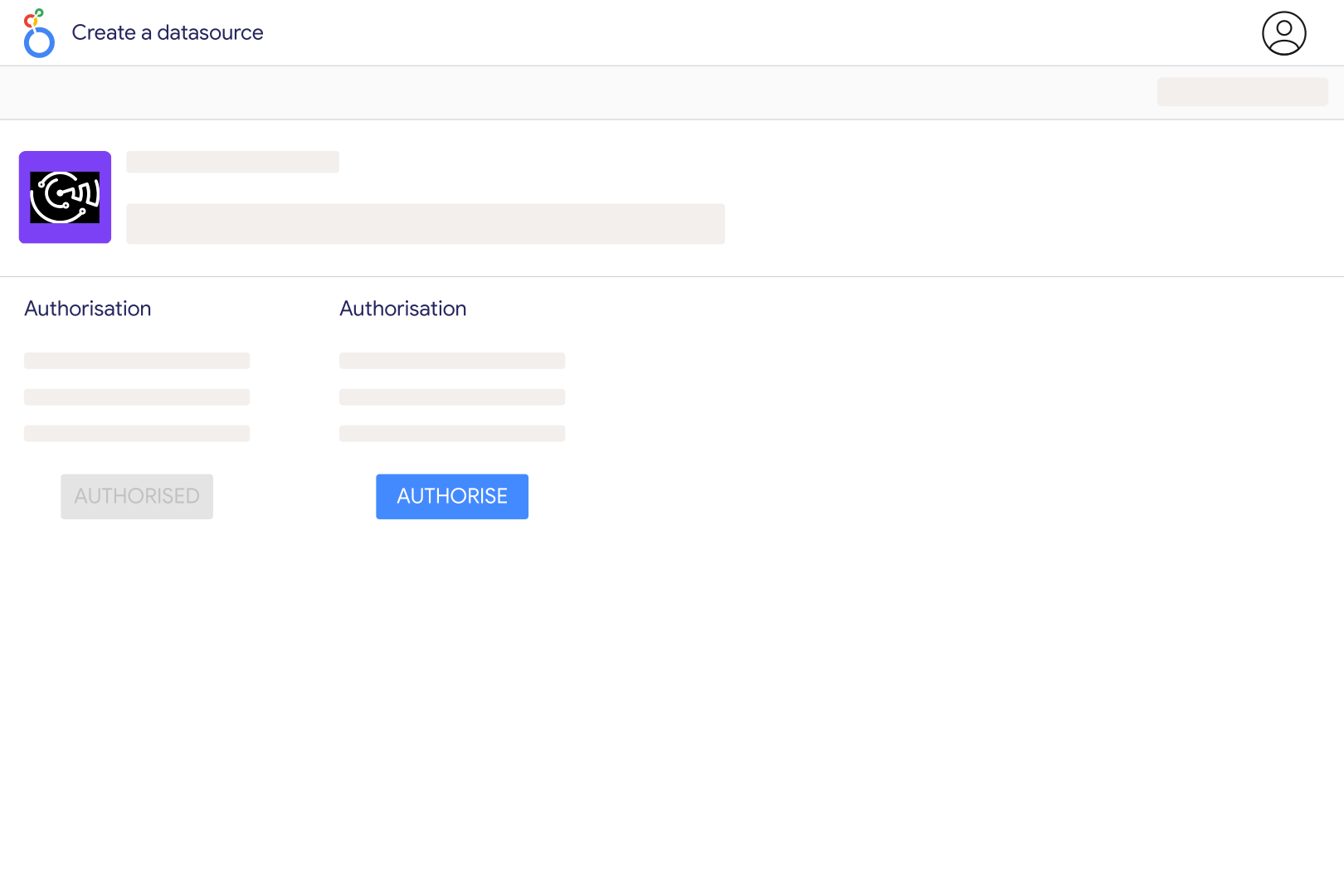
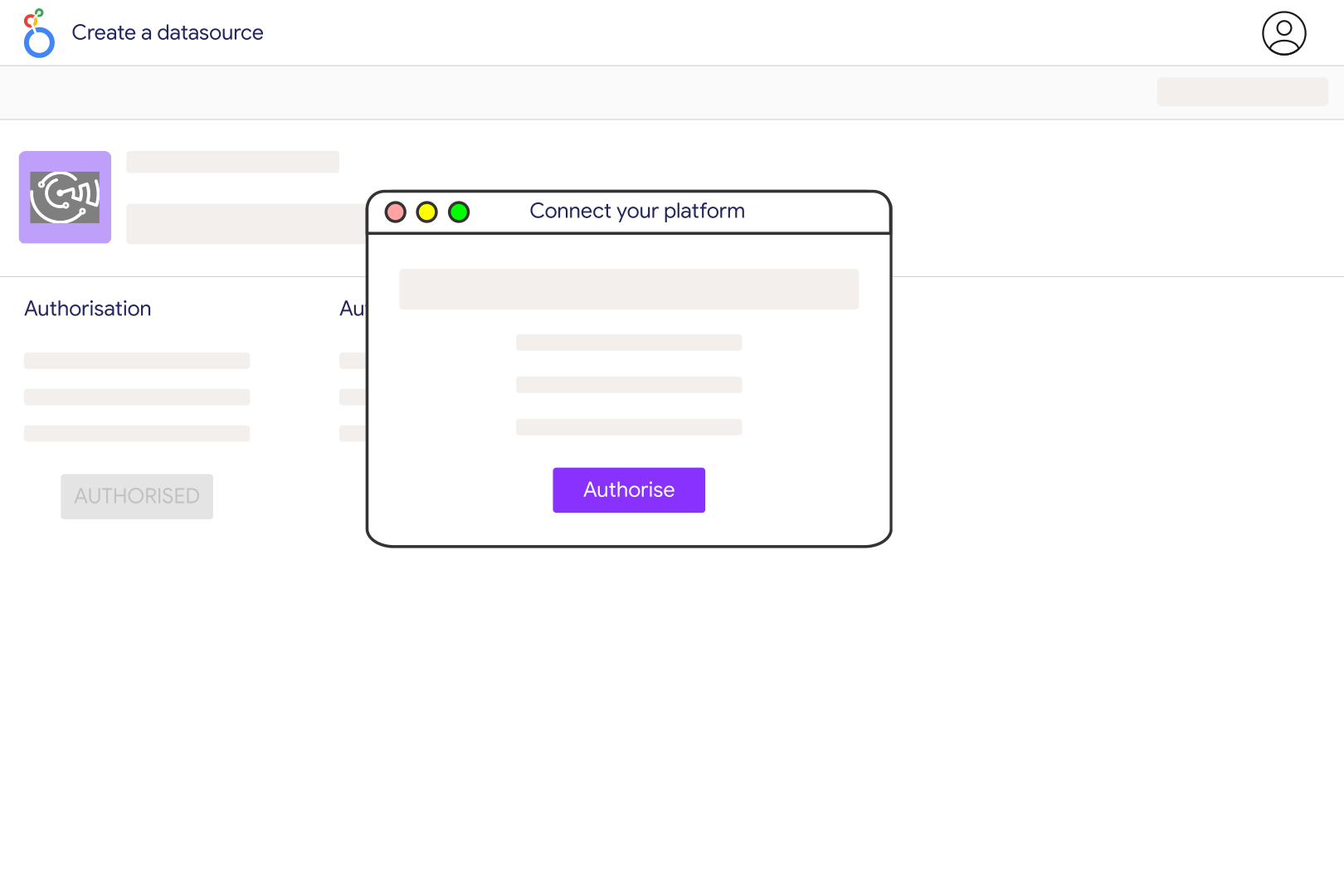
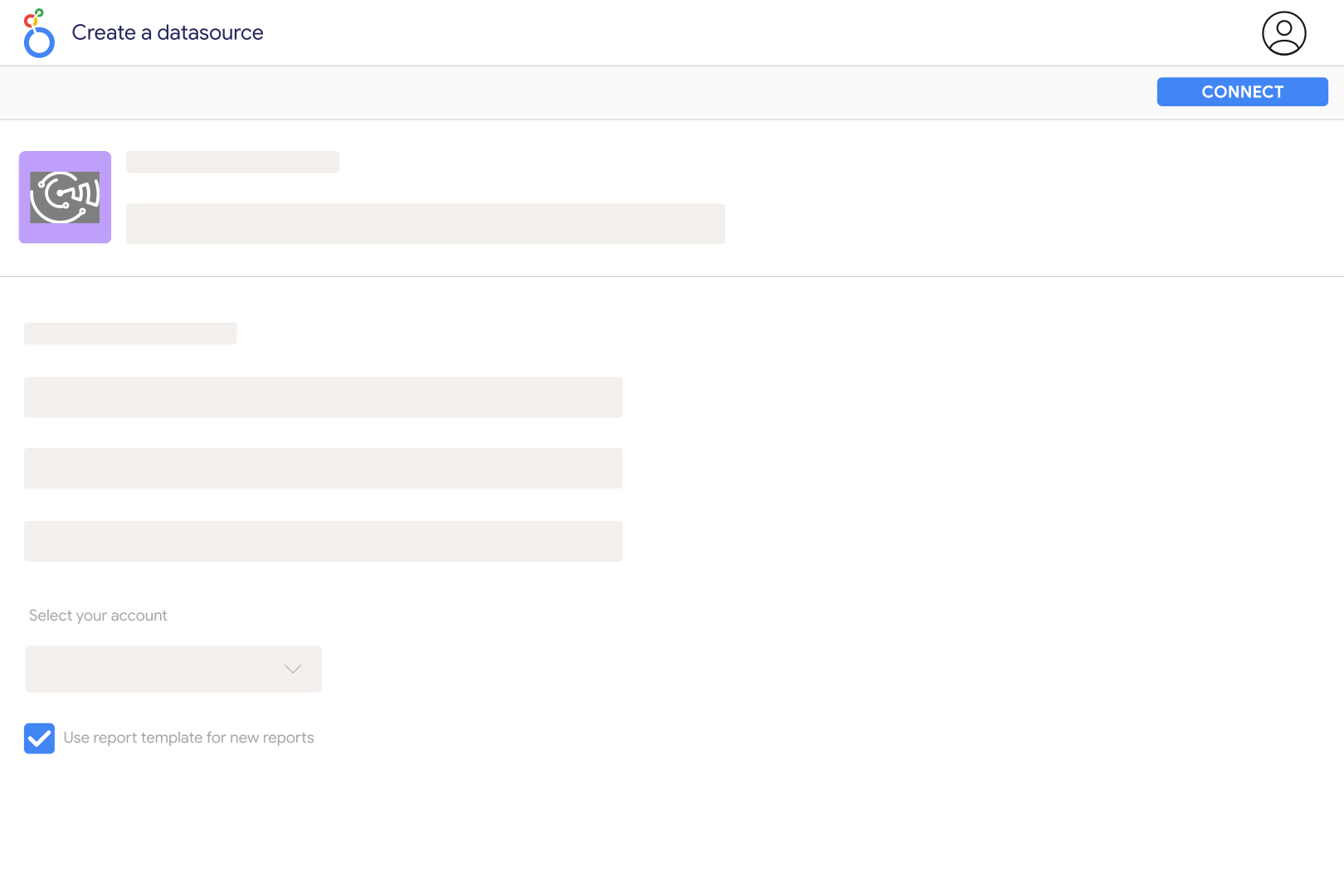
Connect Catchr with a Google account that can access the Business Profile locations you want to report on. In Looker Studio, open the Catchr Google My Business connector, authorize Google, and select your connected source. Create a location table with profile impressions, website clicks, call clicks, and direction requests.
Yes. Google My Business is the former name, and the Catchr connector retains that name. It reports on business locations managed through Google Business Profile. Use the Google account with access to those locations; access to a website’s analytics account alone does not establish access to its Business Profile.
Call clicks count clicks on the profile’s call button; they are not a count of answered phone conversations. Direction requests indicate requests for directions, not confirmed store visits. Website clicks likewise measure clicks from the profile rather than completed website sessions. Label these interactions accurately when reporting leads or local engagement.
Yes. The connector includes separate business-impression metrics for Google Search and Maps on desktop and mobile. Google counts repeat impressions by the same user within a day once within each metric. Adding daily values or different surfaces does not produce a deduplicated count of people across the whole period.
Google provides search-keyword impressions through a monthly report, separate from daily performance metrics. Use month-level charts for keyword trends instead of interpreting the totals as daily activity. Some low-volume values may be represented by a threshold, so keep reported counts and threshold-based estimates distinct when comparing search terms.
Location IDs, titles, store codes, and labels help organize the locations available through your connected account. Use location IDs or unique store codes to distinguish branches with similar names, then create filters or separate charts. Compare locations over the same period and keep local interactions separate from website-wide totals.
Yes. Add Google Analytics 4 to examine website sessions and key events alongside local-profile interactions. Tag profile website links consistently to identify that traffic. Call clicks and direction requests do not automatically become GA4 conversions, and profile website clicks will not necessarily match tracked sessions.
Our team is always here to answer any questions you may have about our data connector.