
Starter
For freelancers and small teams.
$ 24 /mo
Billed monthly · cancel anytime
Platforms3
Accounts10


Used by the world's leading companies








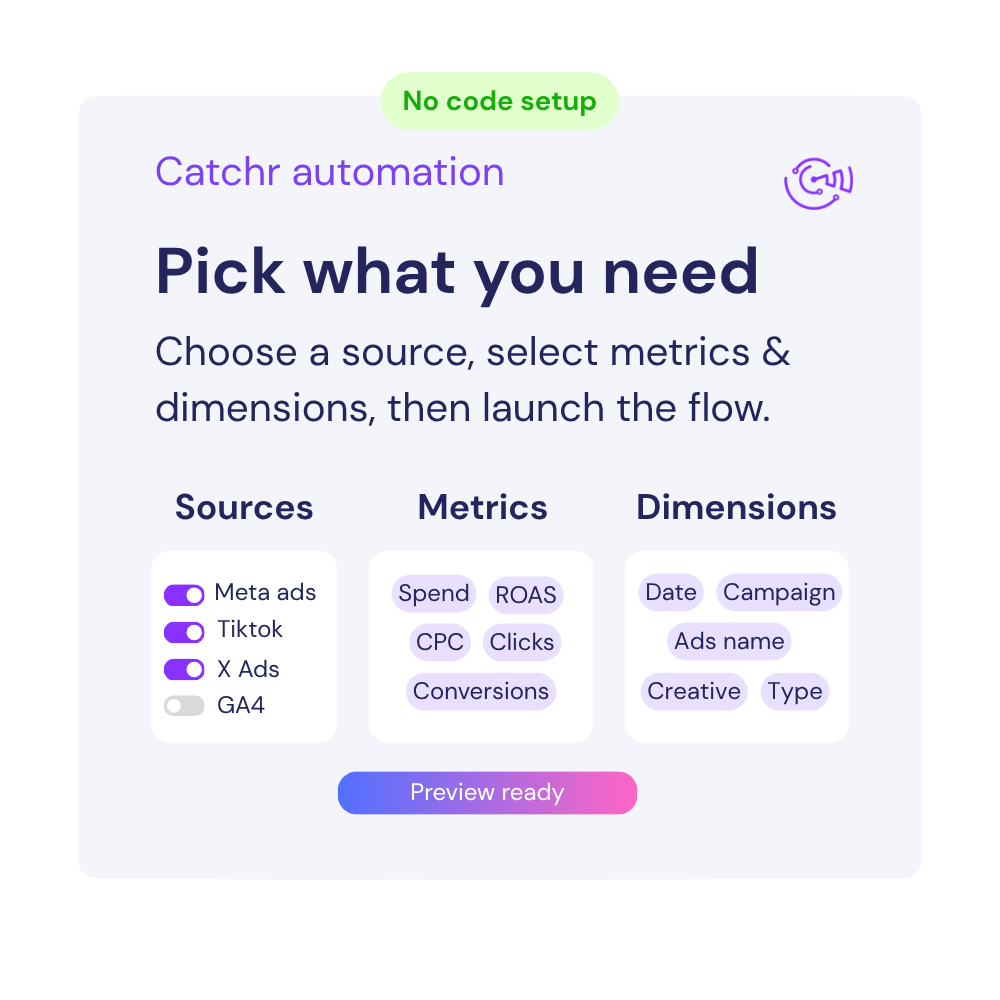
Available metrics
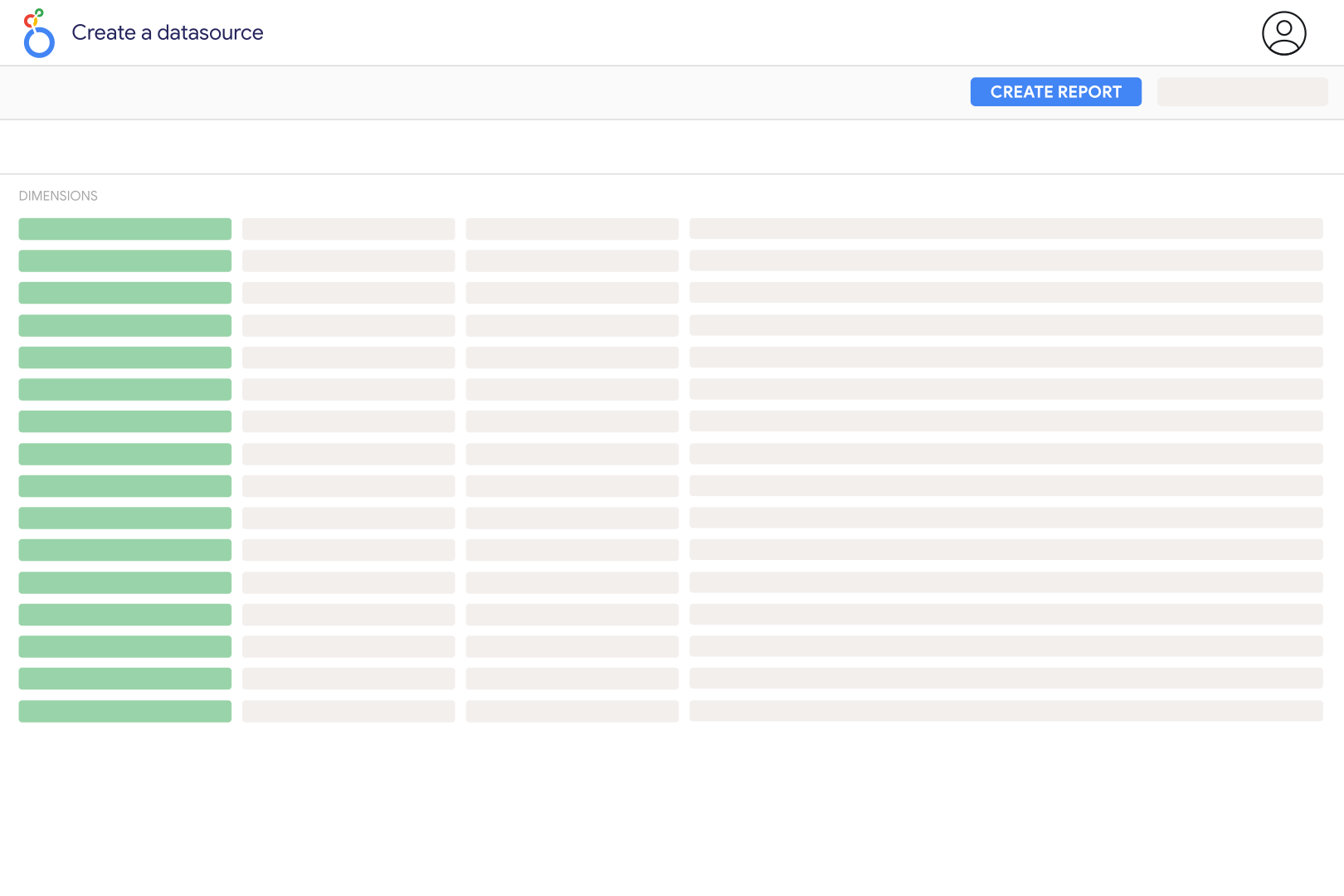
Available dimensions


What our customers say about us.
After three years of use, Catchr has become essential for both our teams and our clients. So far, it has been our best solution for compiling and analyzing data from different advertising platforms. It’s easy to set up, and the customer service is responsive and excellent.

With Catchr’s automated API, we can finally collect and centralize all advertising data, connect it with booking information, and calculate the real ROAS for our restaurant clients. It gives them full visibility, more autonomy, and the ability to optimize campaigns to maximize ROI.

The solution is a real game changer, providing optimal time savings for our data reporting. The major strength of the solution is their highly responsive and professional support.

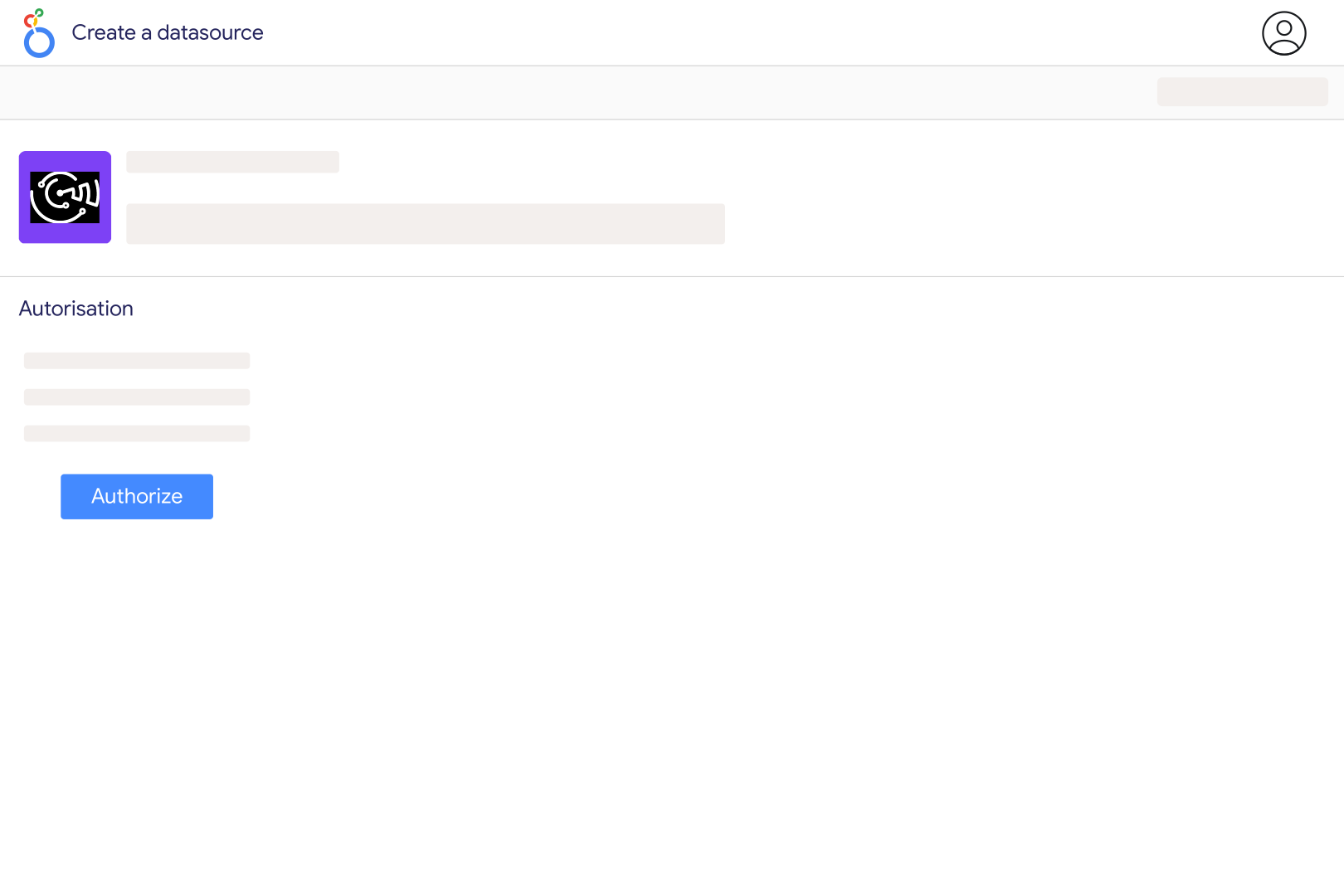
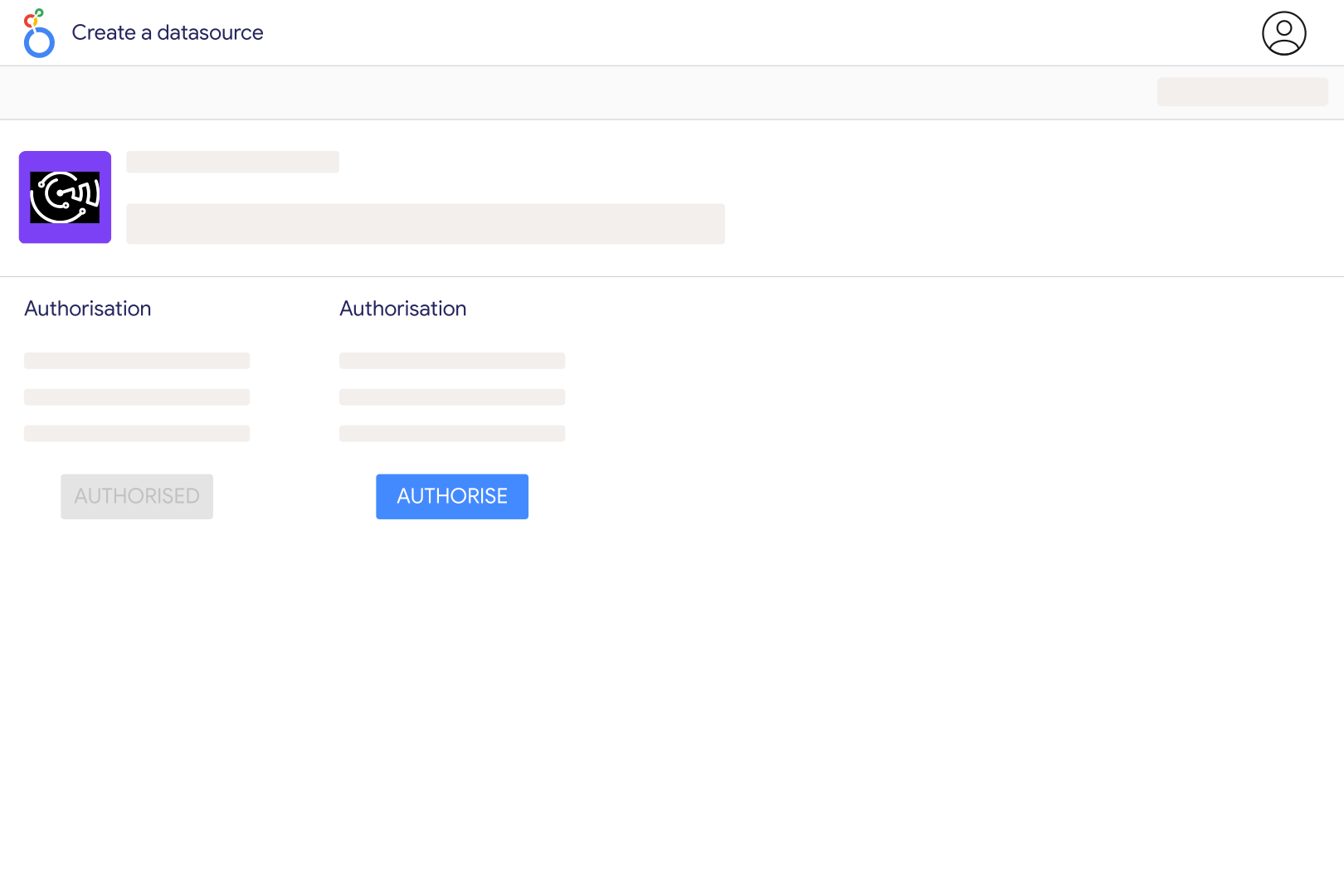
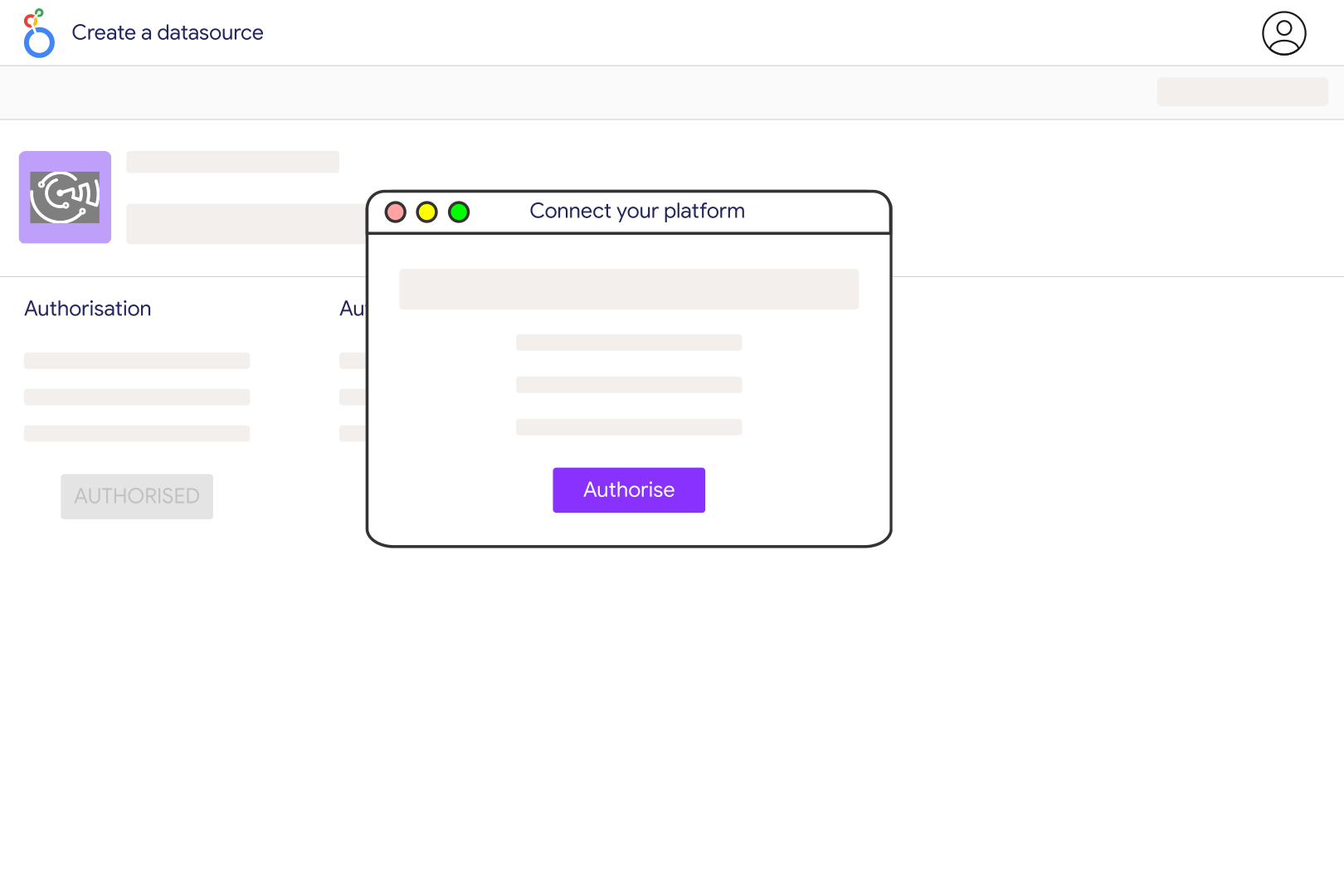
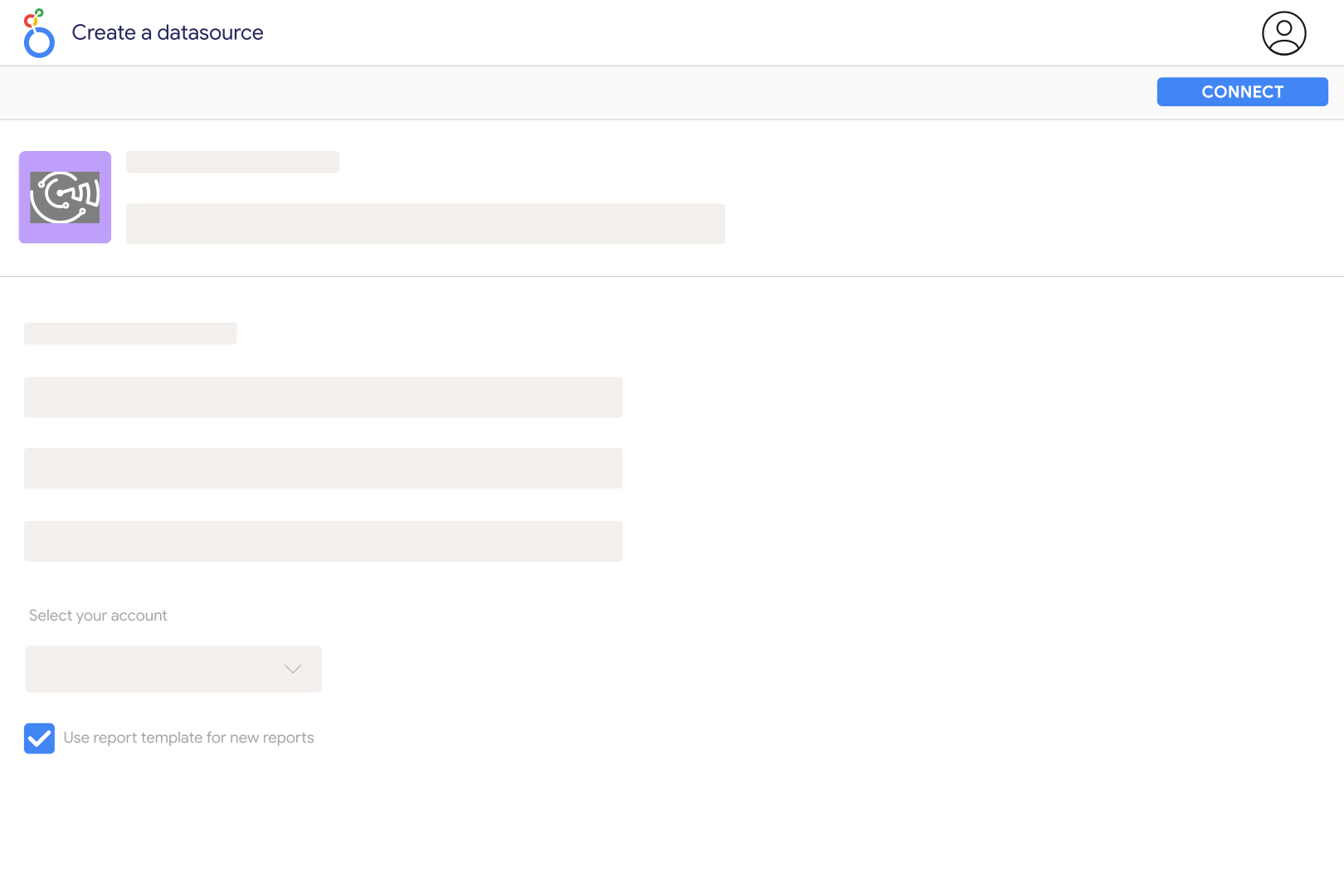
Authorize Catchr with a Google account that can access the Merchant Center account you want to report on. Open the Catchr Google Merchant Center connector in Looker Studio, authorize your Google account, select the source, and create the report. Start with product performance and a separate table of product issues.
Catchr exposes product clicks, impressions, CTR, conversions, and conversion value where available, together with product attributes and status information. Fields such as offer ID, brand, category, custom labels, country, and marketing method help organize the report. Performance, product status, and pricing insights are different reports and may not support every field combination.
Yes. The marketing-method field distinguishes ADS from ORGANIC in the performance data returned by Merchant Center. Use it to keep paid and organic results separate. Product eligibility also has a reporting context, such as Shopping ads or free listings; eligibility and recorded performance answer different questions.
Yes. The connector includes product and account issues, affected attributes, severity, countries, and reporting destinations. Review the country and destination before interpreting a disapproval: a product can be eligible in one context and restricted in another. Count distinct products when measuring affected inventory because one product can have several issues.
No. Price insights include suggested prices and predicted changes in clicks, impressions, or conversions. These are estimates, not results that have already happened. Keep predictions separate from measured performance and consider your margin, currency, and commercial constraints before using them to guide a pricing test.
Check the account, date range, country, marketing method, and product identifiers first. A product-issue table can contain multiple rows for one product, while performance is grouped by the dimensions requested. Avoid joining those rows directly to sales or clicks without aggregation, which can multiply totals. Also compare the same conversion measure in both reports.
Yes. Add Google Ads to compare product visibility or eligibility with advertising costs. Validate product identifiers, account scope, country, and currency before blending. Offer ID alone may not uniquely identify a product across feeds or markets, so test the mapping before calculating product-level efficiency.
Our team is always here to answer any questions you may have about our data connector.