
.png)
Customer success teams need more than contact information. They must understand customer goals, product adoption, account health, support history, sentiment, renewal risk, and expansion opportunities.
That information is often distributed across customer success platforms, CRMs, support systems, product analytics tools, call-recording platforms, and internal documentation.
Model Context Protocol, or MCP, gives compatible AI assistants a standardized way to access approved information from these platforms. Depending on the server and permissions granted, an assistant may be able to prepare account summaries, identify at-risk customers, review adoption, create success plans, analyze conversations, or update customer records.
This guide compares ten official MCP servers that can help customer success teams work with live customer context in 2026.
Pricing note: Prices and MCP availability were checked in July 2026. Vendors may change their plans, pricing, usage limits, and access conditions.
Best customer success MCP servers at a glance
1. Gainsight MCP
Best for complete customer success and retention workflows
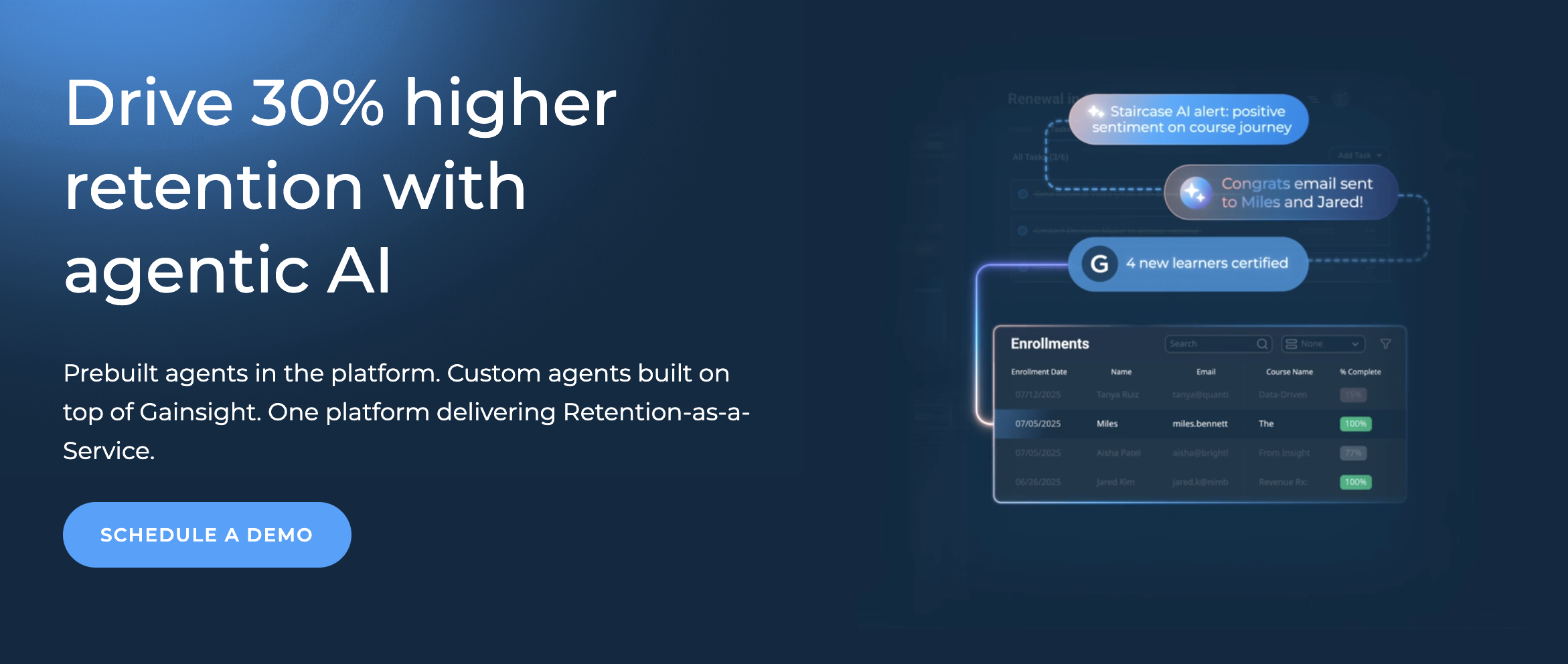
What is Gainsight?
Gainsight is a customer success platform designed to help companies retain customers, improve adoption, manage renewals, and identify expansion opportunities.
It combines customer health scores, calls to action, success plans, customer timelines, journey orchestration, product experience data, community information, and relationship intelligence.
Unlike a general CRM, Gainsight is specifically built around post-sales customer outcomes. It gives customer success managers a structured way to monitor account health, manage risk, coordinate customer plans, and scale engagement.
How its MCP server helps
Gainsight CS MCP connects customer success data directly to AI tools such as ChatGPT, Claude, and Microsoft 365 Copilot.
Users can query companies, calls to action, success plans, timeline activities, and scorecards using natural language. The MCP server also supports selected write actions, including creating calls to action and success plans.
This allows a CSM to ask an AI assistant to prepare for a customer meeting, summarize the current account health, identify renewal risks, or create a follow-up plan without manually assembling information from several Gainsight pages.
Pricing: Gainsight uses custom pricing based on the selected products, number of users, customer volume, and implementation requirements.
Advantages
- Designed specifically for customer success workflows.
- Covers health scores, risks, success plans, renewals, and engagement.
- Supports both information retrieval and selected write actions.
- Connects customer context to several major AI assistants.
Disadvantages
- Pricing is not publicly disclosed.
- Implementation may require significant data integration and configuration.
- Broad access to customer records requires careful permission management.
Explore how Gainsight MCP connects AI assistants to live customer data, account insights, success plans, scorecards, and customer success actions.
2. Planhat MCP
Best for flexible and data-driven post-sales operations
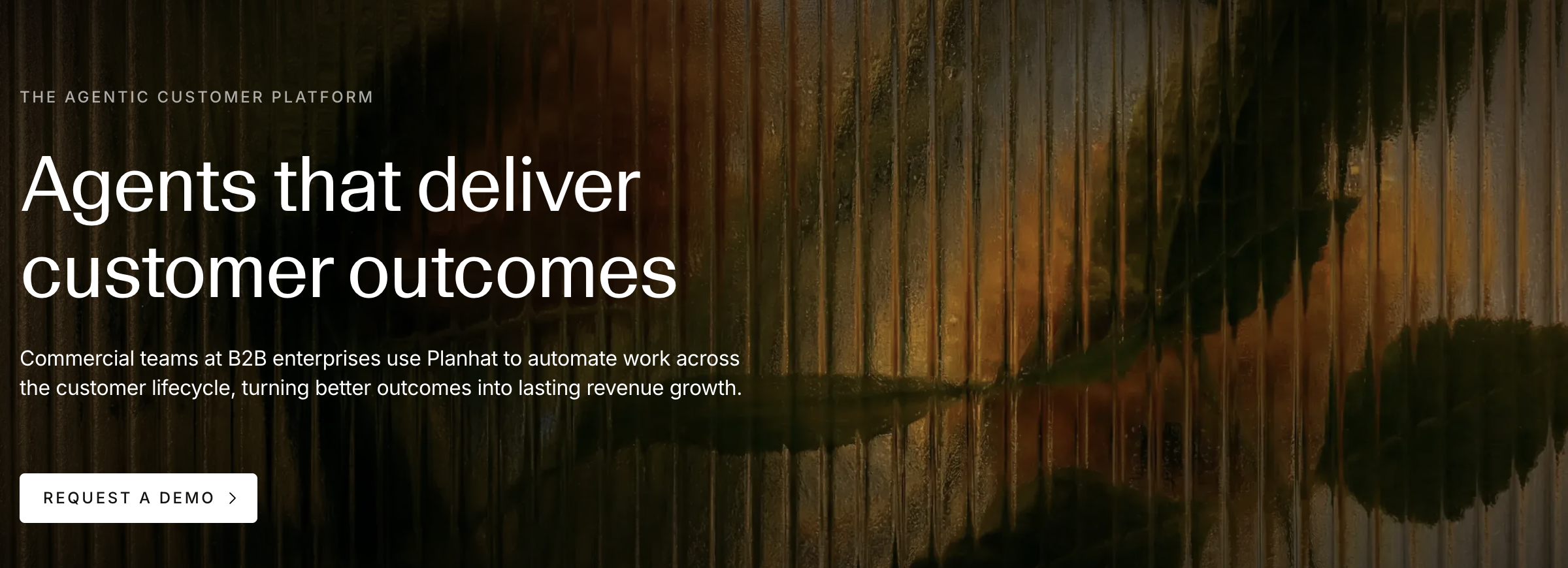
What is Planhat?
Planhat is a customer platform combining customer success management, CRM functionality, revenue information, product usage, workflows, automation, customer portals, and professional services management.
It helps teams manage onboarding, customer health, success plans, tasks, renewals, expansion opportunities, and customer communications from a unified data model.
Compared with Gainsight, Planhat is generally positioned as a more flexible platform that can extend beyond traditional customer success into sales, revenue operations, and service delivery.
How its MCP server helps
Planhat’s official MCP server gives AI assistants secure access to live Planhat data.
Teams can use it to retrieve customer information, synthesize account context, generate insights, answer questions, provide guidance, and combine Planhat data with information from other systems.
Planhat applies enterprise permissions so administrators can control exactly what information an AI assistant can access. Its wider AI platform can bring together CRM data, product usage, support tickets, customer communications, workflows, and other customer signals.
Pricing: Planhat uses quote-based pricing. Pricing can include a fixed platform fee, implementation costs, account-based usage, and optional functionality.
Advantages
- Flexible customer data model.
- Combines customer success, CRM, revenue, and service workflows.
- Gives AI assistants access to broad customer context.
- Enterprise permissions control what can be exposed.
Disadvantages
- Public list pricing is unavailable.
- Setup may be more involved than a lightweight customer success tool.
- The platform may offer more functionality than small teams require.
Discover how the Planhat MCP Server gives AI assistants secure access to live customer data, account context, insights, dashboards, and post-sales workflows.
3. HubSpot MCP Server
Best for connecting customer success with sales and support
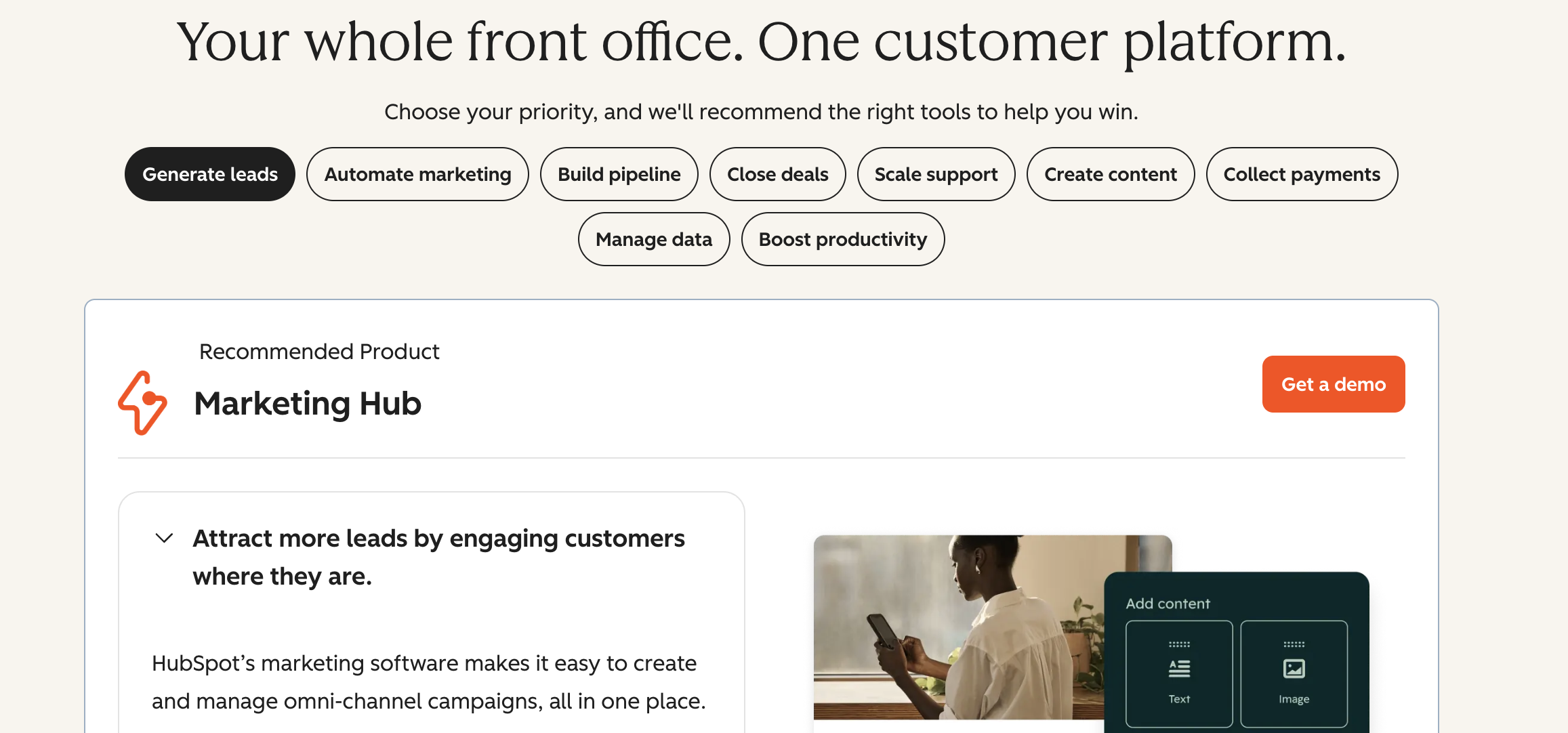
What is HubSpot?
HubSpot is a customer platform combining CRM, marketing, sales, customer service, content, and data-management tools.
Service Hub includes ticketing, help desk functionality, customer feedback, knowledge bases, customer portals, health scores, and a dedicated customer success workspace.
HubSpot is particularly useful for growing companies that want sales, service, marketing, and customer success teams to work from the same contact and company records.
How its MCP server helps
HubSpot’s remote MCP server allows compatible AI assistants to securely access CRM information through OAuth.
Supported information can include companies, contacts, deals, tickets, activities, products, invoices, orders, and other CRM objects. The server supports approved read and write actions while applying the permissions of the connected HubSpot user.
The remote server became generally available to all HubSpot accounts in April 2026.
Pricing: HubSpot Service Hub has a free plan for up to two users. Starter begins at $7 per seat per month when billed annually. Professional, which includes the customer success workspace, starts at $90 per seat per month.
Advantages
- Combines CRM, support, sales, and marketing information.
- Customer success workspace is built into Service Hub Professional.
- Official MCP server supports read and write operations.
- Free and affordable entry-level plans are available.
Disadvantages
- Customer success functionality requires the Professional plan.
- Advanced plans can include onboarding and AI-usage costs.
- Less specialized than Gainsight for complex enterprise CS operations.
Learn how the HubSpot MCP Server enables AI assistants to securely interact with CRM records, customer activities, and approved HubSpot actions.
4. Salesforce Hosted MCP Servers
Best for governed enterprise customer workflows
What is Salesforce?
Salesforce is a highly customizable enterprise CRM platform.
It manages accounts, contacts, opportunities, cases, contracts, subscriptions, customer interactions, workflows, approvals, and custom business objects.
For customer success teams, Salesforce can act as the central system of record for onboarding, account activity, support cases, renewal opportunities, customer stakeholders, and commercial history.
Its main difference from specialized CS platforms is flexibility. Organizations can build their own customer success processes inside Salesforce, but doing so usually requires more administration and configuration.
How its MCP servers help
Salesforce Hosted MCP Servers expose Salesforce data, queries, flows, Apex actions, and other approved capabilities to compatible AI clients.
AI assistants can retrieve account and customer information, search records, update approved objects, and run configured business processes. Salesforce continues to apply its existing authentication, sharing rules, field-level security, permissions, and audit controls.
Hosted MCP Servers became generally available in April 2026 for Enterprise Edition organizations and above.
Pricing: Salesforce Service Cloud Enterprise starts at $175 per user per month when billed annually. Lower editions start at $25, but hosted MCP availability begins with Enterprise Edition.
Advantages
- Extensive customization for complex customer processes.
- Strong enterprise governance and permission controls.
- Can expose company-specific flows and actions.
- Suitable for organizations already using Salesforce as their system of record.
Disadvantages
- MCP access requires an Enterprise-level Salesforce edition.
- Implementation and administration can be complex.
- Specialized customer success functionality may require customization or additional products.
Explore how Salesforce Hosted MCP Servers provide AI assistants with governed access to Salesforce data, automation, flows, and approved business actions.
5. Gong MCP Server
Best for customer conversations and renewal intelligence
What is Gong?
Gong is a revenue intelligence platform that records and analyzes customer calls, online meetings, emails, and commercial activity.
It helps revenue teams understand customer concerns, objections, commitments, sentiment, deal risks, and relationship changes.
For customer success teams, Gong provides qualitative context that may not be visible in structured CRM records. A health score might show that an account is at risk, while Gong can help explain what the customer has actually been saying.
How its MCP server helps
Gong MCP allows external AI assistants to retrieve AI-generated insights based on Gong activity.
Customer success teams can use it to prepare for account reviews, understand customer concerns, identify renewal risk, summarize recent conversations, and generate structured account briefs.
The server is read-only and returns generated insights rather than unrestricted access to every raw transcript or email. It is generally available to Gong customers using Gong Credits.
Pricing: Gong uses custom pricing. Licenses are priced per user, with an additional platform fee based on the number of supported users.
Advantages
- Provides context from real customer conversations.
- Useful for renewals, account reviews, and risk identification.
- Helps customer success teams understand qualitative customer sentiment.
- Can complement CRM and customer health information.
Disadvantages
- Pricing is not publicly disclosed.
- MCP tools consume Gong Credits.
- The server is primarily read-only.
Learn how the Gong MCP Server lets external AI assistants retrieve structured account, deal, customer-risk, stakeholder, and conversation insights from Gong.
6. Amplitude MCP
Best for customer adoption and product-usage analysis
What is Amplitude?
Amplitude is a digital analytics platform for understanding how customers use websites, applications, and digital products.
It provides product analytics, funnels, retention reports, behavioral cohorts, session replay, experimentation, feature flags, guides, surveys, and activation tools.
Unlike a CRM, Amplitude focuses on customer behavior inside the product. This makes it useful for customer success teams that need to understand adoption, feature usage, engagement, and potential churn signals.
How its MCP server helps
Amplitude MCP gives compatible AI assistants access to product analytics information.
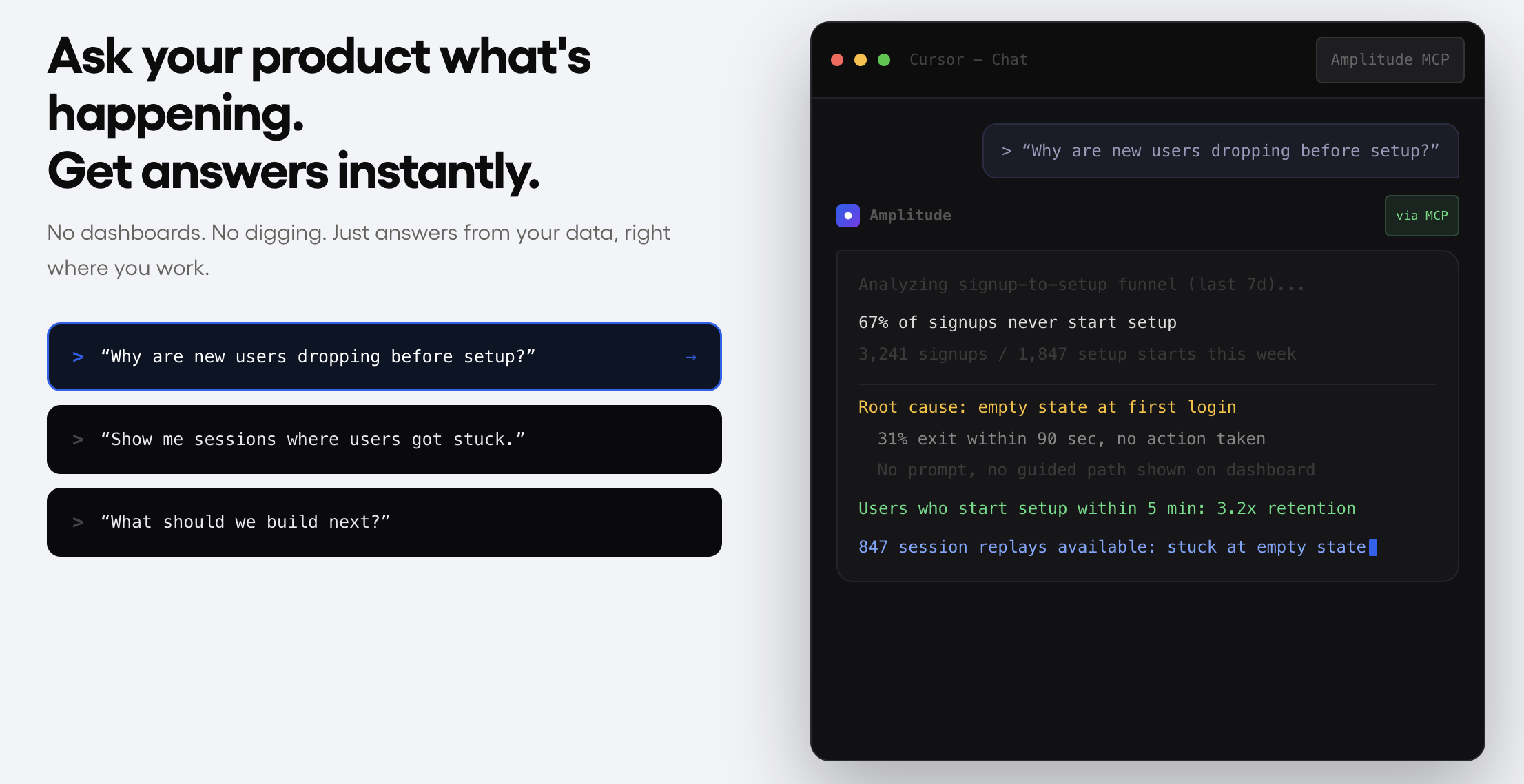
Teams can ask questions about user behavior, retention, cohorts, experiments, dashboards, guides, surveys, and product performance without manually rebuilding analyses.
A CSM could use it to identify customers with declining usage, review adoption before a quarterly business review, compare behavior across account segments, or investigate which features are associated with retention.
MCP is included on every Amplitude plan, including the free plan.
Pricing: Amplitude offers a free plan with unlimited seats and up to two million events per month. Plus uses scalable usage-based pricing, while Growth and Enterprise use custom pricing.
Advantages
- Strong visibility into product adoption and engagement.
- MCP is included on the free plan.
- Useful for identifying usage changes and churn signals.
- Combines analytics, experimentation, replay, and activation.
Disadvantages
- Requires accurate product instrumentation.
- It does not replace a CRM or customer success platform.
- High event volumes may increase costs.
Discover how Amplitude MCP allows AI assistants to analyze product behavior and work with charts, dashboards, cohorts, experiments, retention reports, and other analytics content.
7. Intercom MCP
Best for customer conversations and engagement context

What is Intercom?
Intercom is an AI-first customer service and engagement platform.
It combines a shared inbox, ticketing, live chat, customer messaging, help-center content, reporting, and the Fin AI Agent.
Customer success teams can use Intercom to communicate with customers, review conversation history, send targeted messages, support onboarding, and understand recurring questions.
How its MCP server helps
Intercom’s official MCP server allows compatible AI tools to retrieve Intercom information such as contacts, conversations, and help-center content.
An AI assistant can help a CSM review previous interactions, prepare an account summary, understand open customer questions, or find relevant support information.
The server uses the access rights of the authenticated Intercom user. As of July 2026, the standard Intercom MCP server is supported only for US-hosted workspaces and is not available to EU- or Australia-hosted workspaces.
Pricing: Intercom’s Essential plan starts at $29 per seat per month. Fin is billed separately at $0.99 per successfully resolved outcome.
Advantages
- Combines conversations, tickets, messaging, and customer context.
- Useful for onboarding and proactive customer communication.
- Provides access to customer and help-center information.
- Strong fit for digital and SaaS businesses.
Disadvantages
- MCP access is currently limited by hosting region.
- Fin and messaging usage can create additional charges.
- It is more support-oriented than a complete customer success platform.
Explore how Intercom MCP securely connects compatible AI tools to Intercom contacts, conversations, help-center information, and customer-service data.
8. Zendesk MCP Server
Best for combining support history with customer success context
What is Zendesk?
Zendesk is a customer service platform built around ticketing, messaging, live chat, help centers, voice support, customer records, analytics, and AI agents.
Although it is primarily a support platform, Zendesk contains important customer success information. Ticket frequency, unresolved problems, recurring complaints, and support sentiment can all influence renewal risk and account health.
How its MCP server helps
Zendesk announced its official MCP Server in May 2026.
The server is designed to connect Zendesk tickets, knowledge, and customer information to external AI platforms. This can help customer success teams bring support context into account reviews, renewal preparation, risk analysis, and customer planning.
Because the official Zendesk MCP Server is a newer release, companies should confirm current availability and supported AI clients directly with Zendesk before deployment.
Pricing: Zendesk plans currently start at approximately $19 per agent per month, with pricing increasing according to the selected Suite edition, number of agents, and AI usage.
Advantages
- Provides valuable ticket, support, and customer-history context.
- Useful for identifying recurring issues that may affect retention.
- Combines messaging, knowledge, tickets, and analytics.
- Official MCP server is designed for external AI platforms.
Disadvantages
- The official server is relatively new.
- Teams should confirm availability and supported features.
- Zendesk is not a dedicated customer success management platform.
Read the official Zendesk MCP Server announcement to learn how Zendesk plans to connect tickets, knowledge, and customer information to external AI platforms.
9. Slack MCP Server
Best for internal customer coordination and informal knowledge
What is Slack?
Slack is a workplace communication platform organized around channels, direct messages, files, canvases, applications, and automated workflows.
Customer success teams frequently use Slack to coordinate escalations, discuss customer risks, request help from product teams, share renewal updates, and communicate with customers through shared Slack Connect channels.
Important customer information may therefore exist in Slack without being formally recorded in the CRM.
How its MCP server helps
Slack’s official MCP server lets external AI assistants search real-time Slack information while respecting the connected user’s permissions.
A customer success manager can use it to retrieve previous account discussions, find internal decisions, summarize an escalation channel, identify unresolved action items, or prepare an account update.
Slack’s MCP server and Real-Time Search API became generally available in February 2026.
Pricing: Slack offers a free plan. Pro starts at approximately $7.25 per active user per month when billed annually.
Advantages
- Provides access to recent internal customer discussions.
- Useful for escalations and cross-functional coordination.
- Can surface information not yet recorded in the CRM.
- Applies existing Slack permissions.
Disadvantages
- Important account information can become buried in channels.
- Slack should not be the primary customer system of record.
- Customer data shared in channels requires appropriate governance.
Explore how the Slack MCP Server enables AI assistants to search conversations, retrieve and send messages, manage canvases, access files, and work with workspace members.
10. Notion MCP
Best for customer success playbooks and account documentation
What is Notion?
Notion is a collaborative workspace combining documents, databases, internal wikis, projects, forms, meeting notes, and knowledge management.
Customer success teams can use it to store onboarding plans, customer playbooks, QBR templates, renewal procedures, escalation documentation, meeting notes, and account plans.
Unlike Gainsight or Planhat, Notion does not automatically calculate customer health or ingest product usage. Its strength is flexible documentation and knowledge sharing.
How its MCP server helps
Notion’s hosted MCP server gives compatible AI assistants secure read and write access to a Notion workspace.
A CSM can ask an assistant to retrieve an onboarding process, summarize account notes, create a QBR document, update a success plan, or organize customer information into a structured database.
Access remains limited to the information available to the authenticated Notion user. Notion also added stronger MCP support, comments, meeting transcript access, auditing, and approved-tool controls during 2026.
Pricing: Notion offers a free plan. Plus costs $10 per member per month, while Business costs $20 per member per month.
Advantages
- Flexible for success plans, playbooks, and meeting notes.
- Official hosted MCP server supports read and write actions.
- Easy to adapt to different customer success processes.
- Free plan available.
Disadvantages
- Does not provide native customer health or renewal management.
- Workspaces can become disorganized without clear standards.
- Customer information requires careful permission management.
Discover how Notion MCP gives AI assistants secure read and write access to search, create, update, and organize content within a Notion workspace.
How to choose the right customer success MCP server
Choose Gainsight or Planhat when customer success management is the primary requirement.
Gainsight offers the most specialized structure for health scores, calls to action, success plans, and retention. Planhat provides a flexible customer platform that can support success, revenue, service delivery, and CRM workflows.
Choose HubSpot or Salesforce when customer success must remain closely connected to CRM, sales, and support data. HubSpot is generally easier for growing teams, while Salesforce provides more customization and enterprise control.
Choose Gong when customer conversations and sentiment are important to renewal decisions. Choose Amplitude when product adoption and usage behavior are the main customer-health indicators.
Intercom and Zendesk provide customer conversation and support context. Slack helps retrieve internal discussions, while Notion provides documentation, playbooks, and account plans.
Many organizations will benefit from combining several MCP servers. A SaaS company could use Gainsight for customer health, Amplitude for product adoption, Gong for conversations, Zendesk for support activity, and Slack for internal coordination.
Connect customer success with acquisition and marketing performance
Customer success platforms explain what happens after someone becomes a customer. They do not always show which campaigns, acquisition channels, or marketing interactions originally brought that customer to the business.
Catchr MCP connects ChatGPT and Claude to data from more than 100 marketing, advertising, analytics, CRM, ecommerce, email, SEO, and social platforms.
Customer success and revenue teams can use Catchr alongside their CS tools to review acquisition context, campaign performance, channel changes, and marketing activity related to customer segments or accounts.
Catchr complements customer success platforms rather than replacing them. It provides an additional marketing-performance layer that can help teams understand the complete customer journey from acquisition through retention.
.png)