.png)

Finance teams work across expense platforms, accounting systems, ERP software, payroll tools, billing platforms, planning models, and data warehouses.
Model Context Protocol, or MCP, gives compatible AI assistants a standardized way to access approved financial information and actions. Depending on the platform and permissions granted, an assistant may analyze spending, retrieve account balances, review invoices, investigate variances, query financial models, update transactions, or prepare management reports.
This guide compares ten official MCP servers and first-party MCP capabilities that can help finance teams work more efficiently in 2026.
Pricing note: Prices and MCP availability were checked in July 2026. Vendors may change their plans, pricing, regional availability, and usage limits.
Best finance MCP servers at a glance
1. Ramp MCP
Best for expense management and finance operations
What is Ramp?
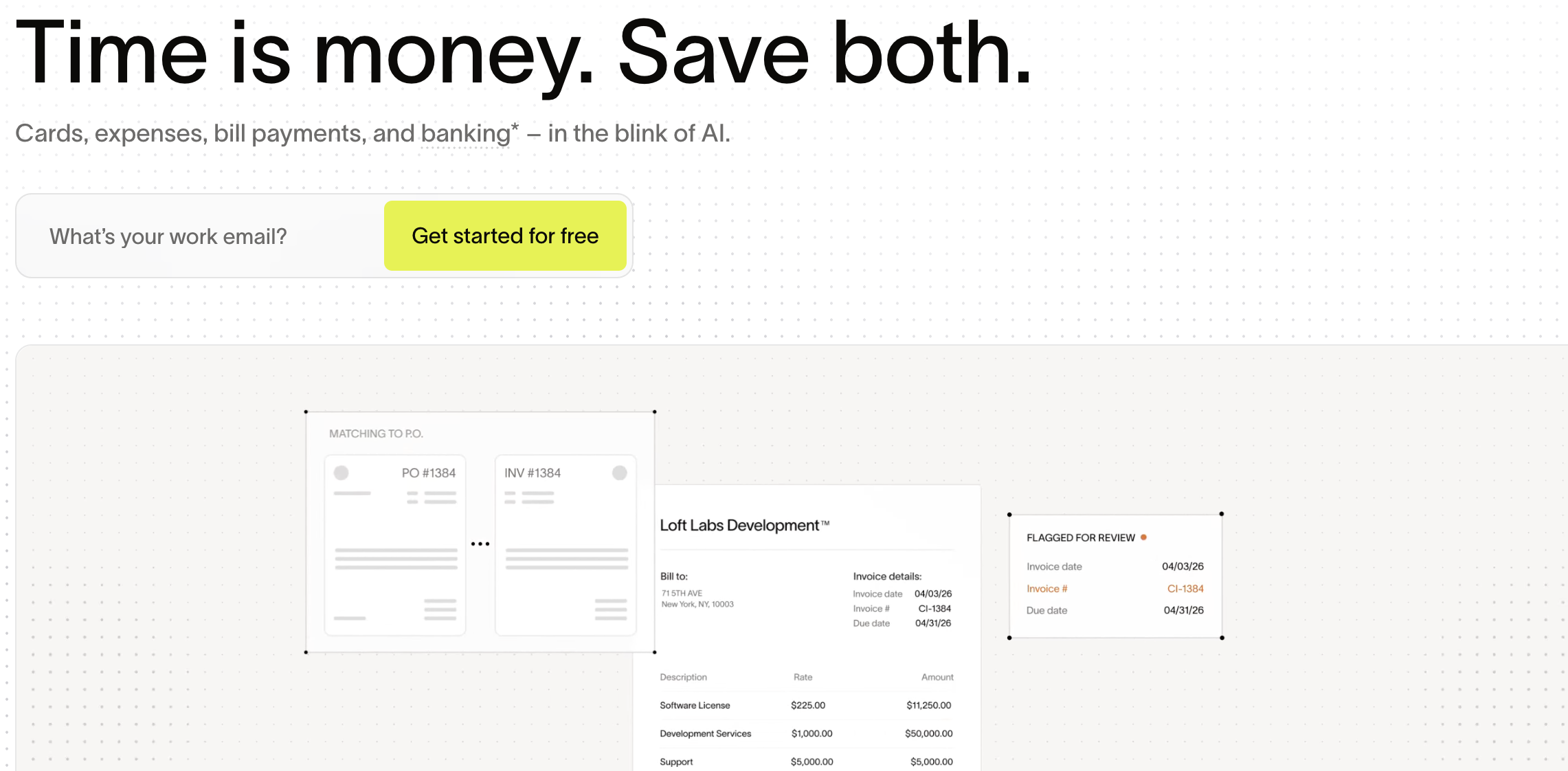
Ramp is a finance automation platform combining corporate cards, expense management, accounts payable, procurement, travel, reimbursements, accounting automation, and business banking.
Its main differentiator is the breadth of day-to-day finance operations it brings into one system. Finance teams can manage employee spending, collect receipts, code transactions, enforce policies, pay vendors, review cash balances, and synchronize records with their accounting platform.
How its MCP server helps
Ramp MCP connects Ramp accounts to AI tools such as ChatGPT, Claude, Notion, and other MCP-compatible clients.
Finance administrators can ask an assistant to find transactions missing receipts or memos, identify uncoded expenses, review pending reimbursements, analyze spend by vendor or department, retrieve treasury balances, check bills, and manage approvals.
The server carries each user’s Ramp permissions into the AI tool, while write actions are recorded in the Ramp Audit Log. Administrators can also restrict MCP access by role, department, or individual user.
Pricing: Ramp’s core card and expense-management platform is free, with unlimited users and cards. Fees may apply to specific payment methods and advanced products, while additional Ramp Plus and enterprise capabilities use paid or custom pricing.
Advantages
- Built specifically for finance administrators and bookkeepers.
- Covers expenses, bills, cards, approvals, and treasury information.
- Supports both analysis and operational actions.
- Uses existing user permissions and audit logs.
Disadvantages
- Primarily designed for businesses operating in Ramp-supported markets.
- Some actions require administrator-level Ramp permissions.
- Receipt uploads are not currently exposed through MCP.
Explore how Ramp MCP connects AI assistants to Ramp expenses, cards, reimbursements, bills, approvals, balances, and finance workflows.
2. Workday Adaptive Planning MCP
Best for budgeting, forecasting, and FP&A
What is Workday Adaptive Planning?
Workday Adaptive Planning is a financial planning and analysis platform for budgeting, forecasting, reporting, workforce planning, scenario modelling, and financial consolidation.
Unlike transactional accounting systems, Adaptive Planning focuses on forward-looking decision-making. Finance teams use it to compare actuals with plans, model alternative scenarios, update assumptions, investigate variances, and create management reports.
How its MCP server helps
Workday allows finance teams to connect Adaptive Planning to external AI assistants such as ChatGPT and Claude through an MCP server.
The connection gives AI workflows access to governed planning information while retaining Adaptive Planning’s native access rules. Finance users can explore data, investigate the reasons behind variances, test changes to assumptions, compare scenarios, and turn model outputs into plain-language narratives.
Workday’s Planning Agent also supports scenario modelling across data from Adaptive Planning, CRM systems, Snowflake, HCM platforms, and other connected sources.
Pricing: Workday Adaptive Planning uses custom pricing based on the organization’s requirements and selected package. A free 30-day trial is available.
Advantages
- Built specifically for financial planning and analysis.
- Strong scenario, forecast, and variance-analysis capabilities.
- Applies native access controls to external AI connections.
- Can incorporate financial and operational data from several systems.
Disadvantages
- Public list pricing is unavailable.
- Implementation requires well-designed financial models and integrations.
- More suitable for established FP&A teams than very small businesses.
See how Workday Adaptive Planning MCP connects governed planning data to external AI assistants such as ChatGPT and Claude for scenario analysis, forecasting, and variance investigation.
3. Dynamics 365 ERP MCP Server
Best for governed enterprise finance operations
What is Dynamics 365 Finance?
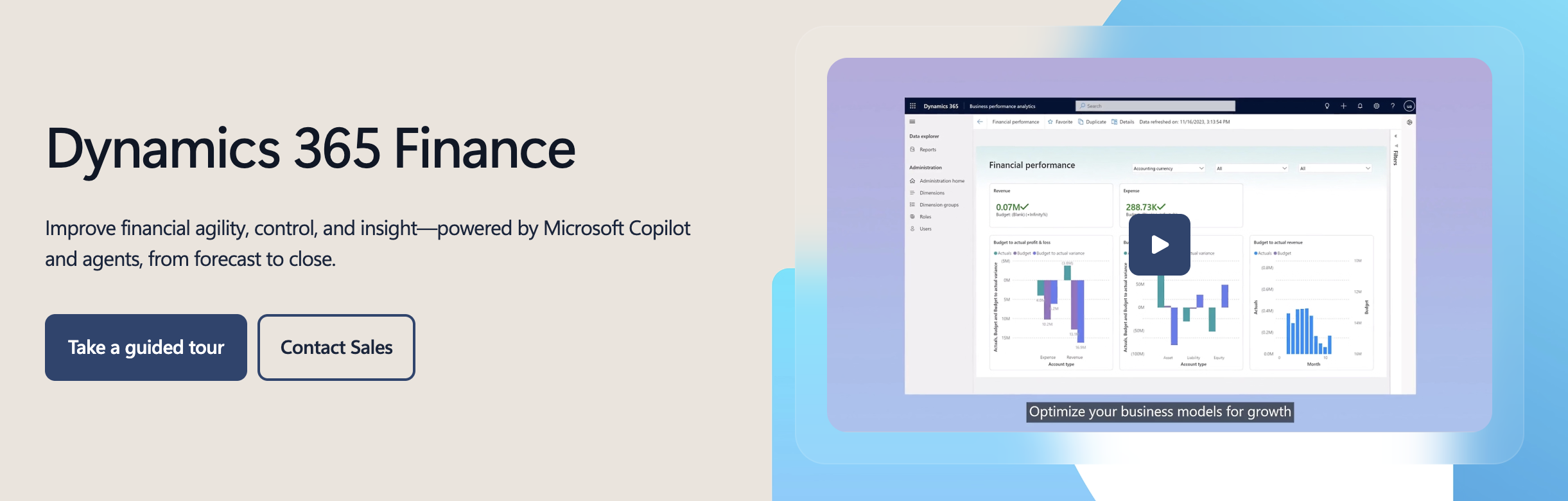
Dynamics 365 Finance is Microsoft’s enterprise financial-management and ERP platform.
It covers general ledger, accounts payable, accounts receivable, budgeting, cash and bank management, asset management, tax, credit and collections, financial reporting, multi-entity operations, and business-performance analytics.
It is designed for large organizations that need finance workflows to remain closely connected to purchasing, supply chain, projects, sales, and other operational processes.
How its MCP server helps
The Dynamics 365 ERP MCP Server gives AI agents controlled access to the data and business logic of Dynamics 365 finance and operations applications.
Its tools can create, read, update, and delete permitted data, interact with application forms, and invoke approved business actions. Finance teams can therefore build agents around invoices, customers, vendors, journals, payments, records, reports, and operational finance processes.
Microsoft also provides a separate ERP Analytics MCP server for asking natural-language questions against Business Performance Analytics data. It retrieves the financial model schema, generates DAX queries, and applies row-level security automatically.
Pricing: In France, Dynamics 365 Finance starts at €182 excluding tax per user per month, paid annually. Finance Premium starts at €259.90 and includes additional business-performance-management capabilities and Copilot credits.
Advantages
- Covers core finance and wider enterprise operations.
- Supports data retrieval and real operational actions.
- Includes a dedicated analytical MCP option.
- Applies existing Dynamics roles and row-level security.
Disadvantages
- Requires substantial ERP implementation and administration.
- Agent execution may require additional Copilot credits.
- More expensive and complex than accounting tools for small businesses.
Explore how the Dynamics 365 ERP MCP Server gives AI agents controlled access to finance and operations data, application forms, and approved business actions.
4. Brex MCP
Best for corporate cards, banking, and spend controls
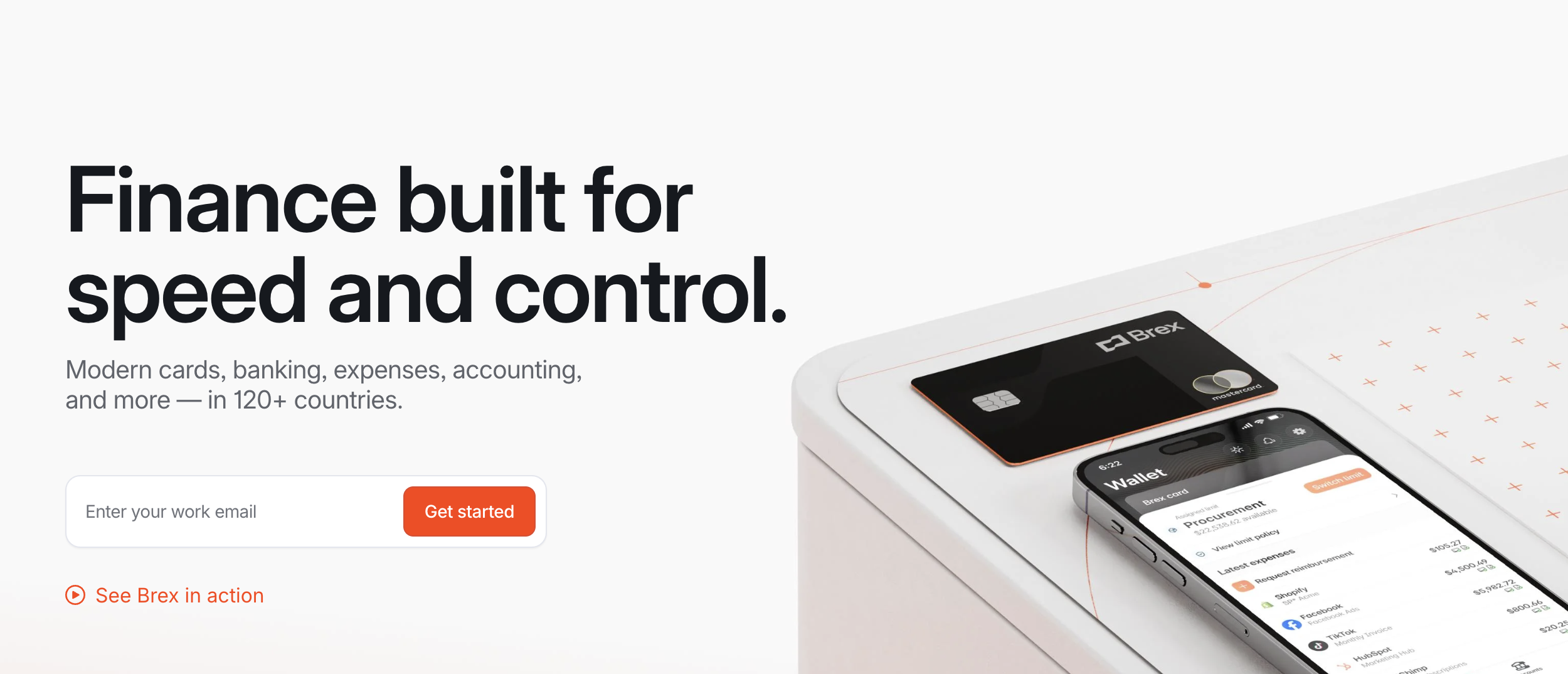
What is Brex?
Brex is a financial platform combining corporate cards, business accounts, expenses, reimbursements, travel, bill pay, budgets, procurement, and accounting integrations
Brex is particularly popular with startups, technology companies, and global businesses that want to manage employee spending and financial operations through one platform.
Compared with Ramp, Brex places additional emphasis on global card programs, business banking, travel, and multi-entity financial operations.
How its MCP server helps
Brex MCP gives AI assistants conversational access to Brex financial data while preserving existing role-based permissions.
Employees can retrieve their card limits, find expenses, update memos, attach receipts, and track reimbursements. Finance administrators can review company expenses, query spend by cost centre or department, retrieve bank balances, inspect banking transactions, check bills and payables, and review connected ERP records.
The official MCP server was released in beta during 2026 and can connect to tools including Claude Code, Cursor, Windsurf, and other MCP-compatible clients.
Pricing: Brex Essentials costs $0 per user per month. Premium costs $12 per user per month, while Enterprise uses custom pricing.
Advantages
- Combines cards, banking, expenses, travel, and bill pay.
- Free plan includes core financial functionality.
- Useful for multi-entity and global companies.
- MCP supports both read and write actions.
Disadvantages
- The MCP server remains in beta.
- Eligibility for Brex accounts and products varies by company and region.
- Advanced controls and integrations require paid plans.
Discover how Brex MCP gives AI assistants conversational access to expenses, cards, reimbursements, banking transactions, balances, and other permitted Brex data.
5. Airwallex AgentOS MCP
Best for global payments and multi-currency finance
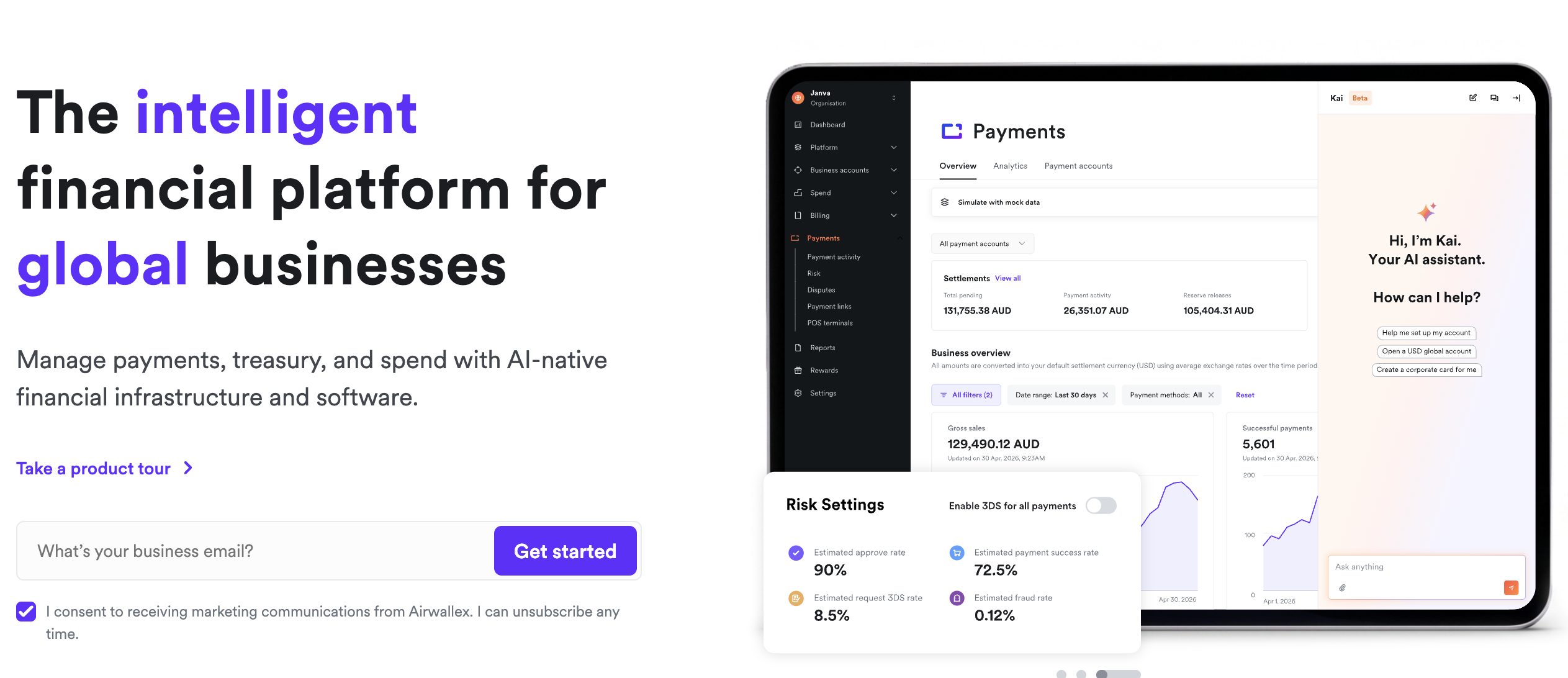
What is Airwallex?
Airwallex is a global financial platform covering multi-currency business accounts, international transfers, foreign exchange, corporate cards, expenses, payment acceptance, billing, and embedded financial services.
Its main advantage is international coverage. Companies can hold and receive several currencies, make cross-border payments, issue cards, collect customer payments, and manage global financial operations from one platform.
How its MCP server helps
Finance teams can query balances across currencies and account types, review receivables and payables, prepare FX conversions, generate invoices from contracts, provision company cards, and connect finance actions to email, Slack, CRM, and accounting workflows.
AgentOS supports live production accounts, sandbox environments, and documentation queries. Official plugins are available for Claude Code, Claude Cowork, and Cursor.
Pricing: In France, Airwallex’s Explore business-account plan starts at €19 per month. The fee can be waived when the business meets specified balance or transaction-volume conditions. Additional payment, FX, card, and advanced-platform fees depend on usage.
Advantages
- Strong multi-currency and international-payment capabilities.
- Covers cash, FX, cards, billing, and expenses.
- Supports live accounts and sandbox testing.
- Useful for global and multi-entity finance teams.
Disadvantages
- Pricing and feature availability vary by region.
- Cross-border fees depend on currencies and payment methods.
- Broad financial actions require strict permissions and approvals.
Explore how Airwallex AgentOS enables AI agents to review balances, create beneficiaries, issue cards, prepare cash-flow reports, and perform multi-step financial workflows.
6. Dynamics 365 Business Central MCP
Best for small and midsize business accounting
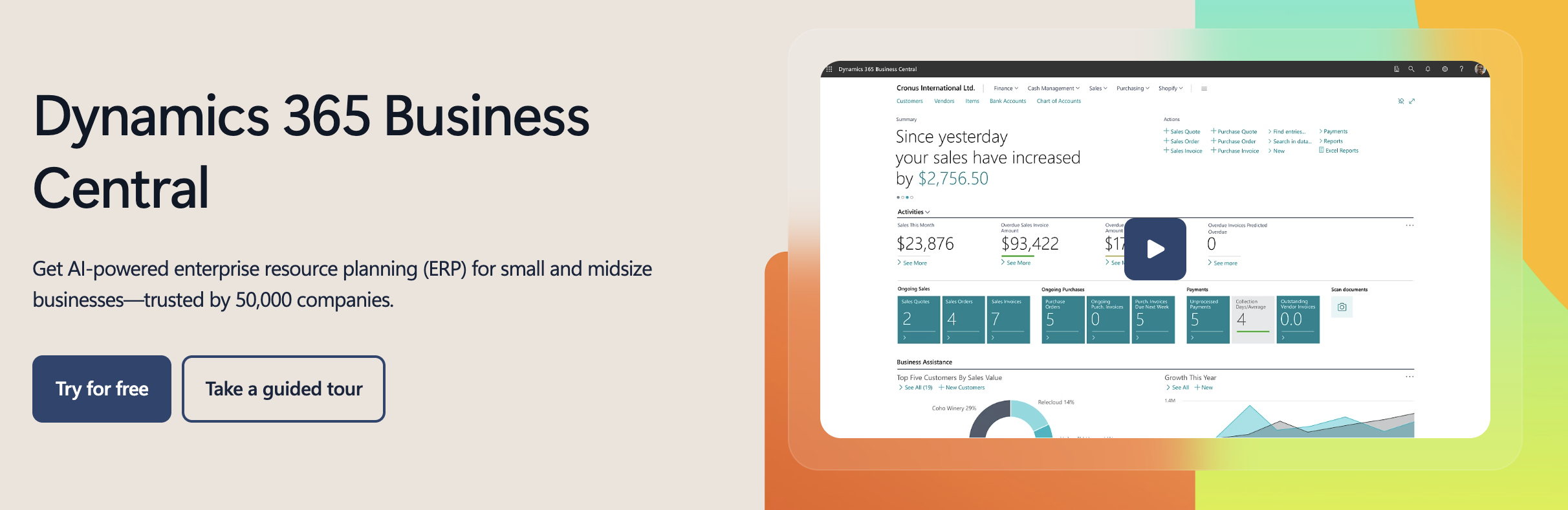
What is Business Central?
Microsoft Dynamics 365 Business Central is an ERP platform for small and midsize companies.
It connects accounting with sales, purchasing, inventory, projects, services, manufacturing, and business operations. Finance teams can manage the general ledger, bank reconciliation, receivables, payables, budgets, cash flow, fixed assets, and multi-company financial information.
Compared with Dynamics 365 Finance, Business Central is easier to deploy and more accessible to midsize organizations with less complex ERP requirements.
How its MCP server helps
The Business Central MCP Server lets AI clients access Business Central data and business logic.
Agents can list, create, edit, and delete permitted records or perform approved actions such as posting documents and changing statuses. By default, the server provides read-only access to exposed Business Central APIs. Administrators must explicitly enable write operations.
Configurations can expose selected API pages and define exactly which create, update, delete, or bound actions are available to the AI client.
Pricing: In France, Business Central Essentials starts at €69.30 excluding tax per user per month, paid annually. Premium starts at €95.30. A free 30-day trial is available.
Advantages
- Combines accounting with broader business operations.
- More accessible than a large enterprise ERP.
- Read-only access is enabled by default.
- Administrators can configure individual MCP actions.
Disadvantages
- Requires careful API and permission configuration.
- Implementation often involves a Microsoft partner.
- Less appropriate for highly complex multinational finance operations.
Learn how the Business Central MCP Server allows AI clients to work securely with Business Central records, APIs, business logic, and approved operational actions.
7. Stripe MCP Server
Best for payments, billing, and revenue operations
What is Stripe?
Stripe is a payments and financial-infrastructure platform.
It provides payment processing, subscriptions, recurring billing, invoicing, tax calculation, revenue recognition, payment links, marketplace payments, fraud prevention, and financial reporting.
Stripe is not a general accounting or ERP system. Its main relevance to finance teams is the revenue side of the business: collecting payments, managing subscriptions, issuing invoices, processing refunds, and understanding payment activity.
How its MCP server helps
Stripe’s official MCP server allows AI agents to interact with the Stripe API and search Stripe documentation and support content.
Depending on the permissions granted, an assistant can retrieve balances, customers, invoices, subscriptions, payments, refunds, products, and other Stripe resources. It can also perform supported actions through the Stripe API.
The server is currently in public preview. Stripe recommends using restricted API keys and sandbox environments to limit the financial and customer data available to an agent.
Pricing: Stripe uses usage-based pricing with no standard monthly platform fee. In France, standard European Economic Area card payments start at 1.5% plus €0.25 per successful transaction. Pricing differs for international cards and additional Stripe products.
Advantages
- Strong access to payments, subscriptions, invoices, and revenue data.
- Official hosted MCP server.
- Useful documentation and API context.
- Sandbox environments support safer testing.
Disadvantages
- It does not replace an accounting or FP&A platform.
- Write actions can affect real customers and payments.
- Product-specific fees can become complicated.
Explore how the Stripe MCP Server gives AI agents access to permitted Stripe API tools, documentation, and support knowledge for payments, invoices, subscriptions, customers, and revenue operations.
8. Snowflake Managed MCP Server
Best for governed financial analytics across enterprise data
What is Snowflake?
Snowflake is a cloud data platform for storing, transforming, analysing, and sharing structured and unstructured data.
Finance teams use Snowflake to bring together information from ERP systems, billing platforms, CRMs, banks, payroll tools, and operational applications. It can provide a governed data layer for financial reporting, profitability analysis, forecasting, and management dashboards.
Snowflake is not an accounting system. Its value comes from unifying data that would otherwise remain fragmented across several finance and business platforms.
How its MCP server helps
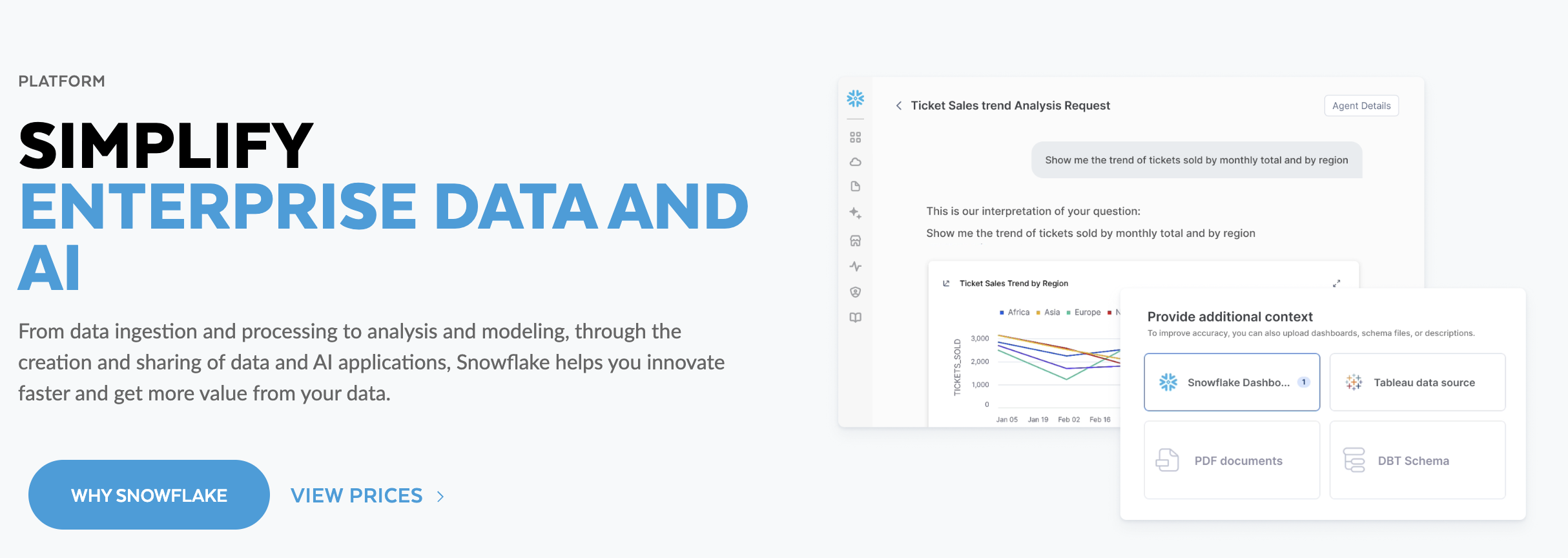
The Snowflake-managed MCP server allows AI agents to retrieve and analyze Snowflake data without deploying a separate MCP infrastructure.
Organizations can expose Cortex Analyst, Cortex Search, Cortex Agents, custom tools, and controlled SQL execution. OAuth authentication and role-based access controls determine which tools and datasets each user can access.
The Snowflake-managed server has been generally available since November 2025.
Pricing: Snowflake uses consumption-based pricing based on compute, storage, cloud region, and selected services. AI features use separate AI Credits, with costs scaling according to usage rather than seats.
Advantages
- Combines financial data from many source systems.
- Strong governance and role-based access.
- Supports structured queries and unstructured document search.
- No separate MCP infrastructure is required.
Disadvantages
- Requires a well-maintained data warehouse and financial data model.
- Consumption costs can be difficult to predict.
- It does not perform core accounting processes by itself.
Discover how the Snowflake-managed MCP server lets AI agents securely retrieve and analyse governed Snowflake data through Cortex Analyst, Cortex Search, Cortex Agents, custom tools, and controlled SQL execution.
9. Oracle Essbase MCP Server
Best for financial modelling and multidimensional analysis
What is Oracle Essbase?
Oracle Essbase is a multidimensional analytics and modelling platform.
Finance and FP&A teams use Essbase for budgeting, forecasting, profitability analysis, allocations, financial consolidation, scenario modelling, management reporting, and complex calculations.
Unlike a general data warehouse, Essbase is designed around business dimensions such as accounts, entities, periods, products, regions, versions, and scenarios. This makes it particularly effective for finance models with complex calculation logic.
How its MCP server helps
The Oracle Essbase MCP Server exposes Essbase operations as AI-callable tools.
Finance users can ask an assistant to list applications, inspect outlines, browse dimension members, query data, run calculation scripts, and manage permitted security resources. The server includes 30 task-oriented tools and provides read-only defaults, access profiles, audit logging, output limits, and confirmation requirements for destructive actions.
The official server was introduced in June 2026 as part of Oracle’s oracle-data-studio package.
Pricing: Oracle Essbase uses custom licensing or Oracle Cloud Infrastructure deployment pricing. Costs depend on the deployment, compute, storage, licensing model, and associated Oracle services. The MCP software itself is included as part of the supporting Oracle tooling rather than sold as a standalone subscription.
Advantages
- Designed for sophisticated finance models.
- Supports calculations, outlines, data queries, and scenarios.
- Includes finance-appropriate controls and read-only defaults.
- Useful for existing Oracle EPM and Essbase environments.
Disadvantages
- Requires Essbase expertise and an existing model.
- Pricing is not transparent.
- More complex than modern cloud FP&A tools for smaller teams.
Read the official Oracle Essbase MCP Server announcement to see how AI assistants can query data, inspect outlines, browse dimensions, run calculations, and perform permitted Essbase operations.
10. Gusto MCP
Best for payroll and workforce-cost administration
What is Gusto?
Gusto is a payroll, benefits, and HR platform primarily designed for small and midsize businesses in the United States.
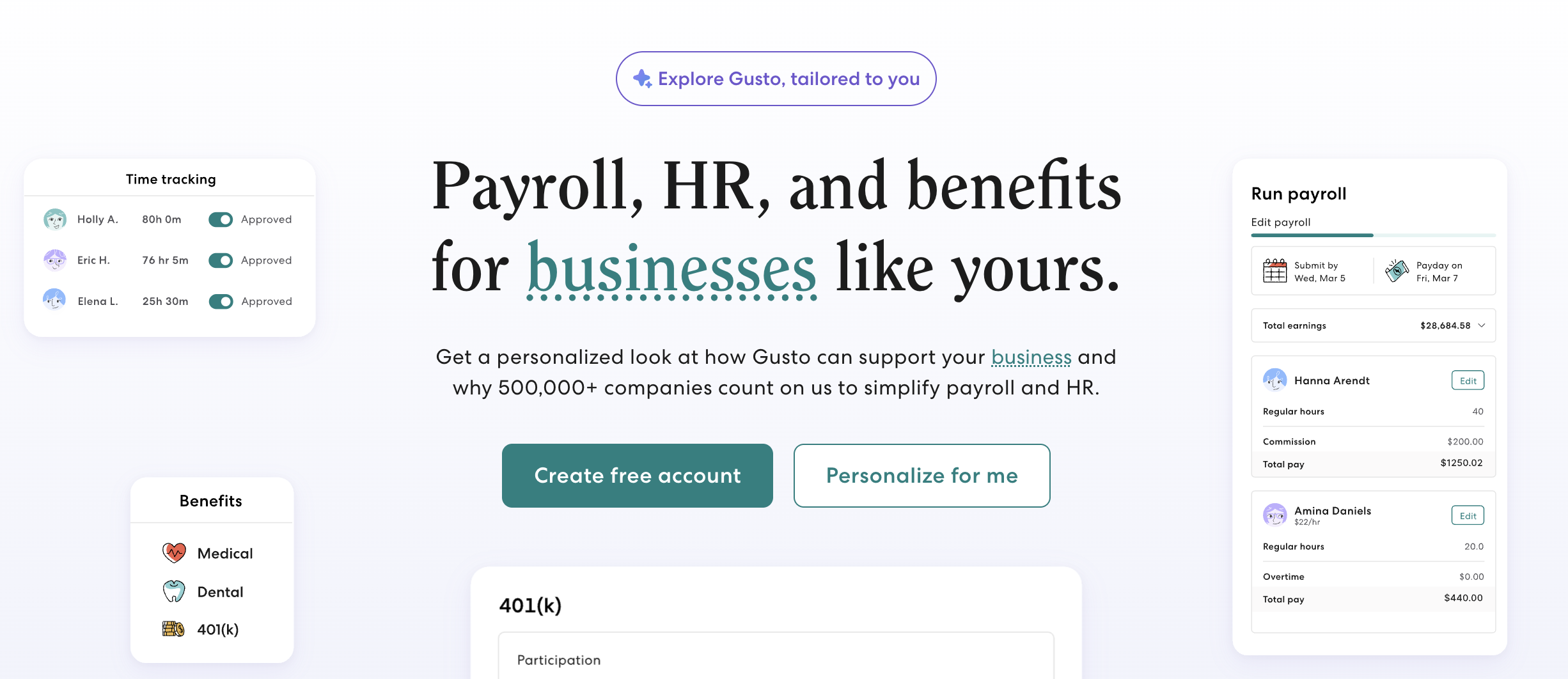
It combines payroll processing, tax filing, employee and contractor payments, benefits administration, hiring, time tracking, expense management, and workforce reporting.
Although Gusto is also an HR tool, it is relevant to finance teams because payroll, benefits, compensation, employer taxes, and reimbursements are often among a company’s largest operating costs.
How its MCP server helps
Gusto MCP connects compatible AI platforms to company, employee, contractor, compensation, benefits, payroll, timesheet, and payment information.
Finance administrators can ask about payroll deadlines, retrieve workforce-cost information, review previous payrolls, analyse compensation data, and investigate payment details.
There is no separate fee for connecting Gusto through MCP. Some advanced actions, including running payroll, are still available only to a limited group of customers during the early-access phase.
Pricing: Gusto’s Simple plan starts at $49 per month plus $6 per person. Plus starts at $80 per month plus $12 per person, while Premium starts at $180 plus $22 per person.
Advantages
- Combines payroll, benefits, taxes, and workforce information.
- Transparent pricing.
- No separate MCP connection fee.
- Useful for analysing one of the company’s largest expense categories.
Disadvantages
- Primarily designed for US payroll.
- Some advanced MCP actions remain in early access.
- Payroll data requires particularly strict access controls.
Explore how Gusto MCP connects AI assistants to permitted company, employee, payroll, compensation, benefits, timesheet, and payment information.
How to choose the right finance MCP server
Choose Ramp or Brex when spend management, cards, expenses, reimbursements, and bill payments are the main priorities. Ramp is particularly strong for finance automation and close-related workflows, while Brex provides a broader combination of spend, travel, and business banking.
Choose Airwallex when the company operates internationally and needs multi-currency accounts, FX, global payments, and cross-border billing.
Choose Dynamics 365 Finance for complex enterprise ERP processes. Business Central is the more accessible Microsoft option for small and midsize companies.
Choose Workday Adaptive Planning or Oracle Essbase for FP&A, forecasting, scenario modelling, and management reporting. Adaptive Planning offers a more modern cloud-planning experience, while Essbase remains powerful for complex multidimensional financial models.
Choose Stripe for payment, subscription, invoice, and revenue workflows. Use Gusto for payroll and workforce costs.
Snowflake is the strongest option when the finance team first needs to unify information from several systems into a governed analytical data layer.
Many organizations will benefit from combining several servers. A company could use Ramp for expenses, Dynamics 365 for accounting, Workday Adaptive Planning for forecasts, Stripe for revenue, and Snowflake for consolidated analysis.
Connect financial decisions with marketing-performance data
Finance platforms explain how money is spent, collected, recorded, and forecast. They do not always show which marketing campaigns and acquisition channels influenced revenue, leads, and customer growth.
Catchr MCP connects ChatGPT and Claude to data from more than 100 marketing, advertising, analytics, CRM, ecommerce, email, SEO, and social platforms.
Finance teams can use Catchr alongside their finance systems to review advertising spend, compare channel performance, investigate changes in acquisition costs, and connect marketing activity with revenue and pipeline discussions.
Catchr complements financial platforms rather than replacing them. It provides the marketing-performance context finance teams need when evaluating budgets, profitability, and resource allocation.