
Prepare data before every question.
- Export files from the marketing platform
- Reformat and reconcile columns
- Rebuild the analysis for each follow-up


Trusted by marketing teams that talk to data every day








 Meta Ads
3 advertising accounts
Connected
Meta Ads
3 advertising accounts
Connected
 Google Ads
2 advertising accounts
Connected
Google Ads
2 advertising accounts
Connected
 Google Analytics 4
1 web property
Connected
Google Analytics 4
1 web property
Connected
 HubSpot
1 CRM portal
Connected
HubSpot
1 CRM portal
Connected

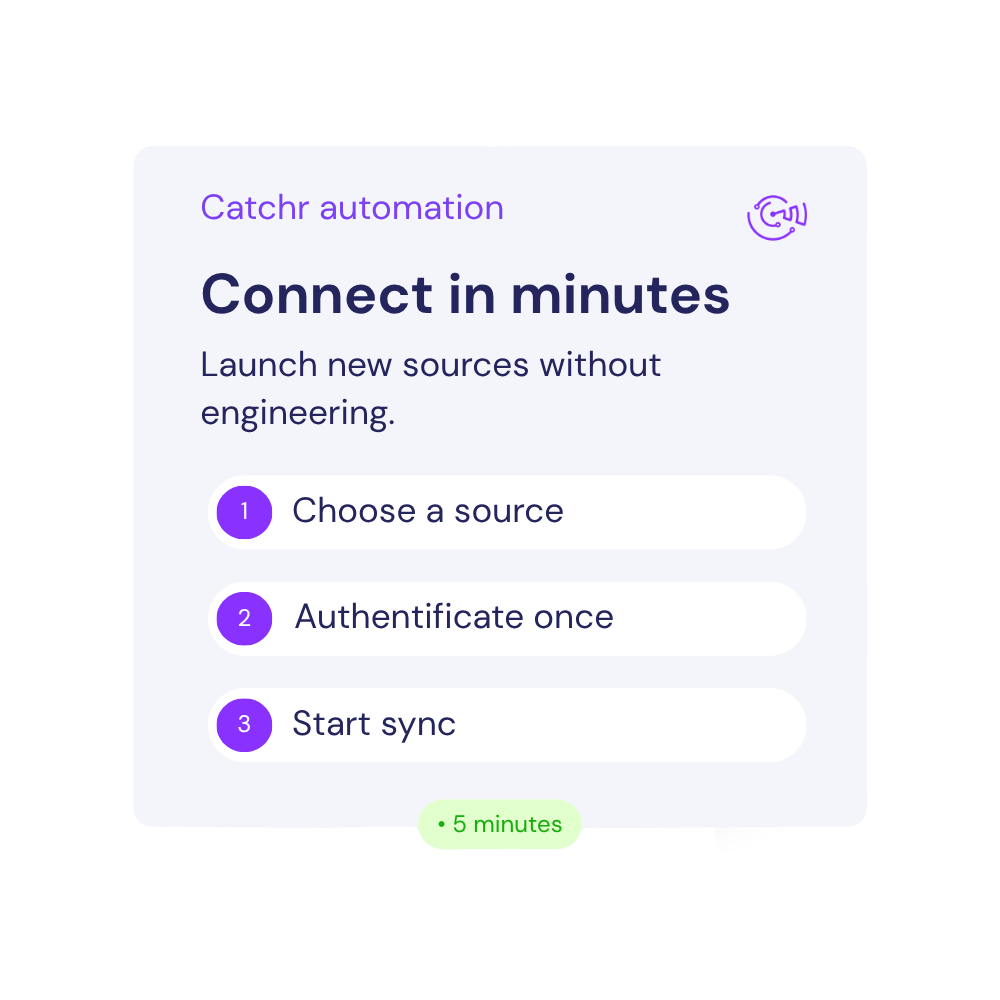
Configure the Catchr remote MCP connection in ChatGPT using the connector details from Catchr.
Replace account, period, KPI target, and threshold variables before you ask ChatGPT.

“Why did CPA rise?” sounds simple. The answer is usually buried across exports, formulas, filters, and tabs before the analysis can even start.
Choose the right account, date range, breakdowns, and fields. Then wait for the file and do it again when the question changes.
Rename columns, fix formats, join tabs, and check formulas before you can trust the comparison.
Turn the numbers into a client-ready answer, then repeat the whole process for the inevitable follow-up.
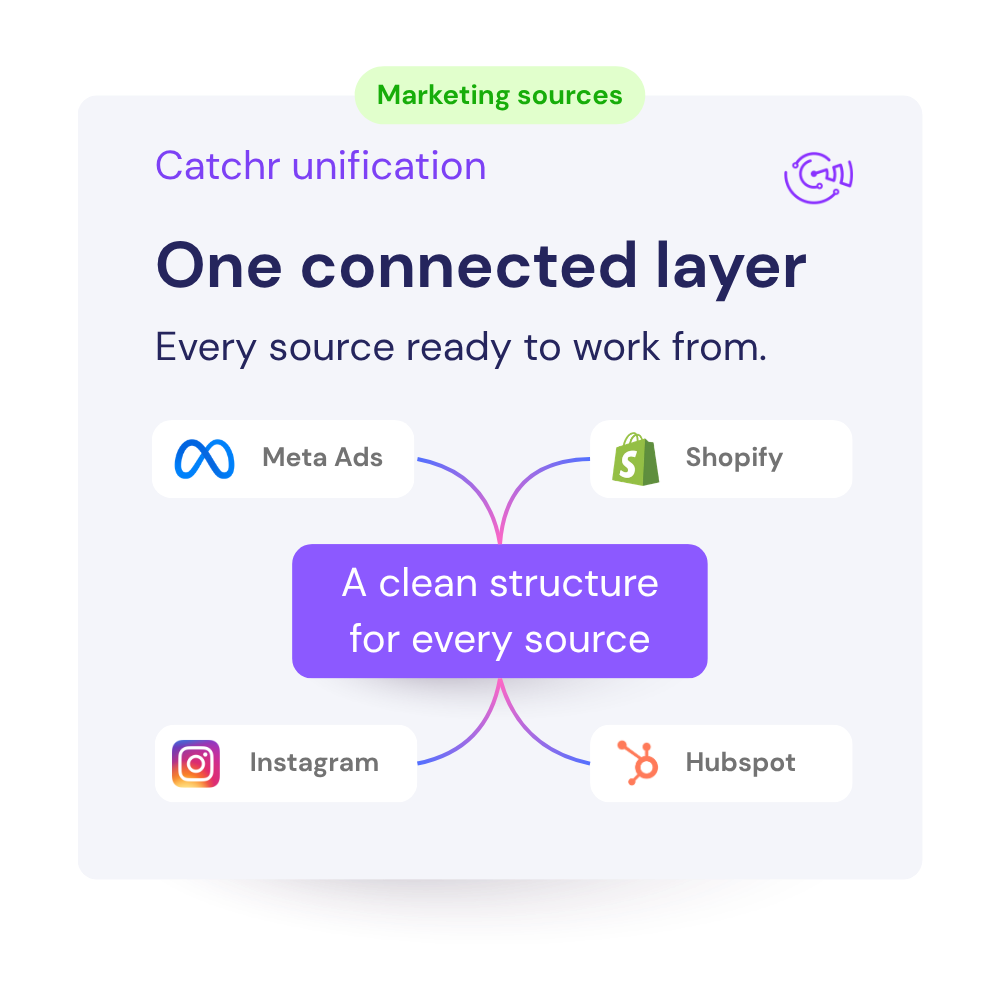
Catchr MCP gives ChatGPT access to the marketing accounts you select, so each follow-up starts with the same marketing context instead of a new manual export.
ChatGPT can analyze connected ChatGPT Ads reporting and advertiser resources, including impressions, clicks, spend, conversions, CTR, CPC, and CPM. It can also use account, campaign, ad group, and ad details such as names, IDs, statuses, budgets, currency, creative text, and destination URLs.
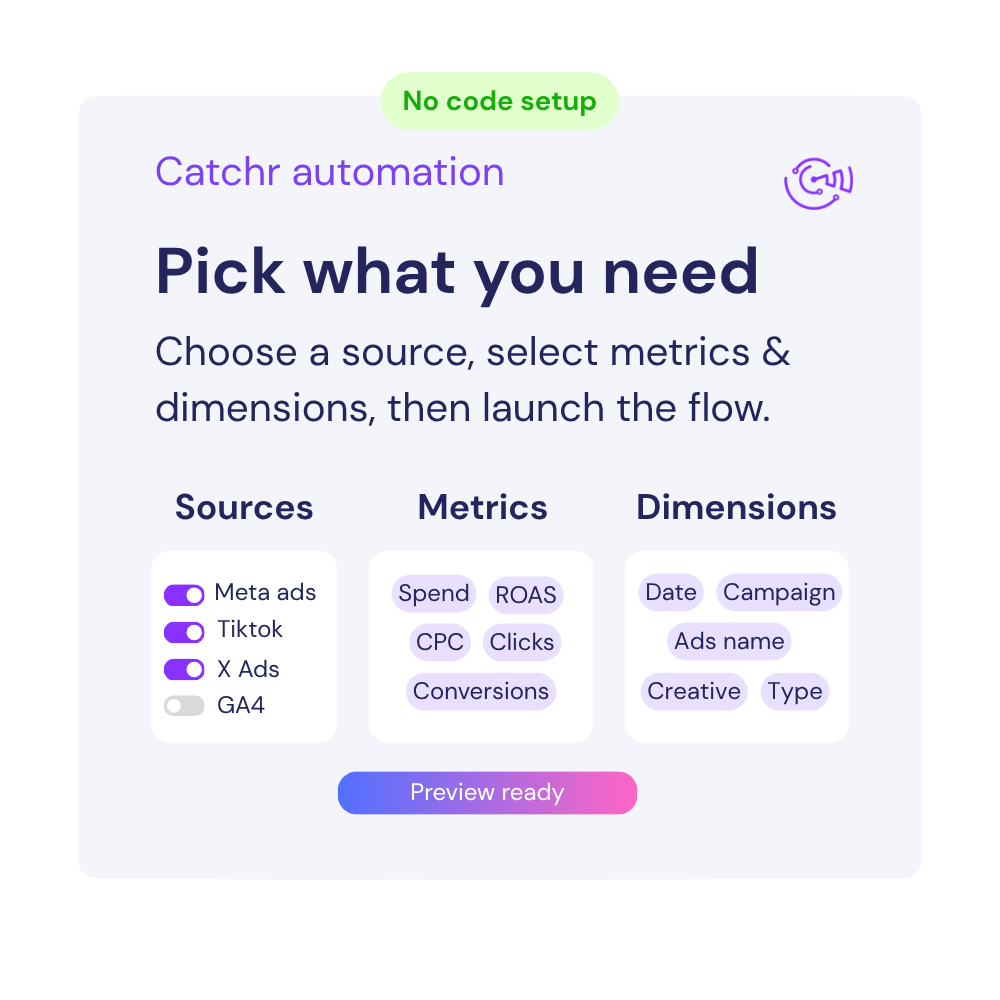
ChatGPT can break down available data by account, campaign, ad group, or ad, alongside standard date dimensions. Product, country, and device are performance segments, but a reporting request can select only one of these segments at a time.
Yes. ChatGPT can compare spend, conversions, clicks, impressions, CTR, CPC, and CPM across campaigns, ad groups, or ads, with available daily and lifetime budgets for context. Provide the period, objective, and minimum data threshold so the priorities match your client or campaign goals.
Yes. ChatGPT can surface delivery and efficiency patterns using campaign, ad-group, and ad performance, plus available titles, body text, destination URLs, statuses, and budgets. Ask it to separate observed results from possible explanations because the data alone does not prove why performance changed.
Use prompts that specify the account or campaign, date range, reporting level, comparison, and metric. For example, ask ChatGPT to rank campaigns by spend and conversions, flag ads with high impressions but low CTR, or compare CPC and CPM across campaigns.
Yes, when the other sources are also connected to Catchr. Align dates, currencies, identifiers, and metric definitions before comparing results; when a reliable join is unavailable, request a side-by-side channel comparison instead of combined attribution.
ChatGPT can compare campaigns, ad groups, and ads available from the connected ad account. Each ChatGPT Ads API key currently resolves one ad account, so additional accounts must be connected separately before you request a broader comparison.
You need a bearer API key created in OpenAI Ads Manager, a Catchr workspace with ChatGPT Ads connected, and Catchr MCP enabled in ChatGPT. The connection provides read-only access to the ad account resolved by that API key.
ChatGPT analyzes the records returned by the connected ChatGPT Ads source and should not assume they are real time. Freshness and historical coverage depend on the requested period, available reporting data, and source API limits, so ask for the latest reporting date and any missing intervals before interpreting trends.
No. The ChatGPT Ads connector is read-only and cannot create campaigns, change budgets or targeting, upload creatives, or upload conversion events. Use its analysis to prepare recommendations, then review the supporting data and make approved changes in the appropriate advertising interface.
Our team is always here to answer any questions you may have about our data connector.
Connect yout marketing platform to ChatGPT with Catchr MCP and start investigating current campaign performance.