Home > Destinations > ChatGPT > Google Play Review

Connect Google Play Review to ChatGPT

Connect Google Play Review to ChatGPT and ask about any metrics or dimensions using current integrations data. No CSV exports or manual campaign summaries.

Looker Studio
Power BI
Google Sheets
BigQuery
Snowflake

Trusted by marketing teams that talk to data everyday

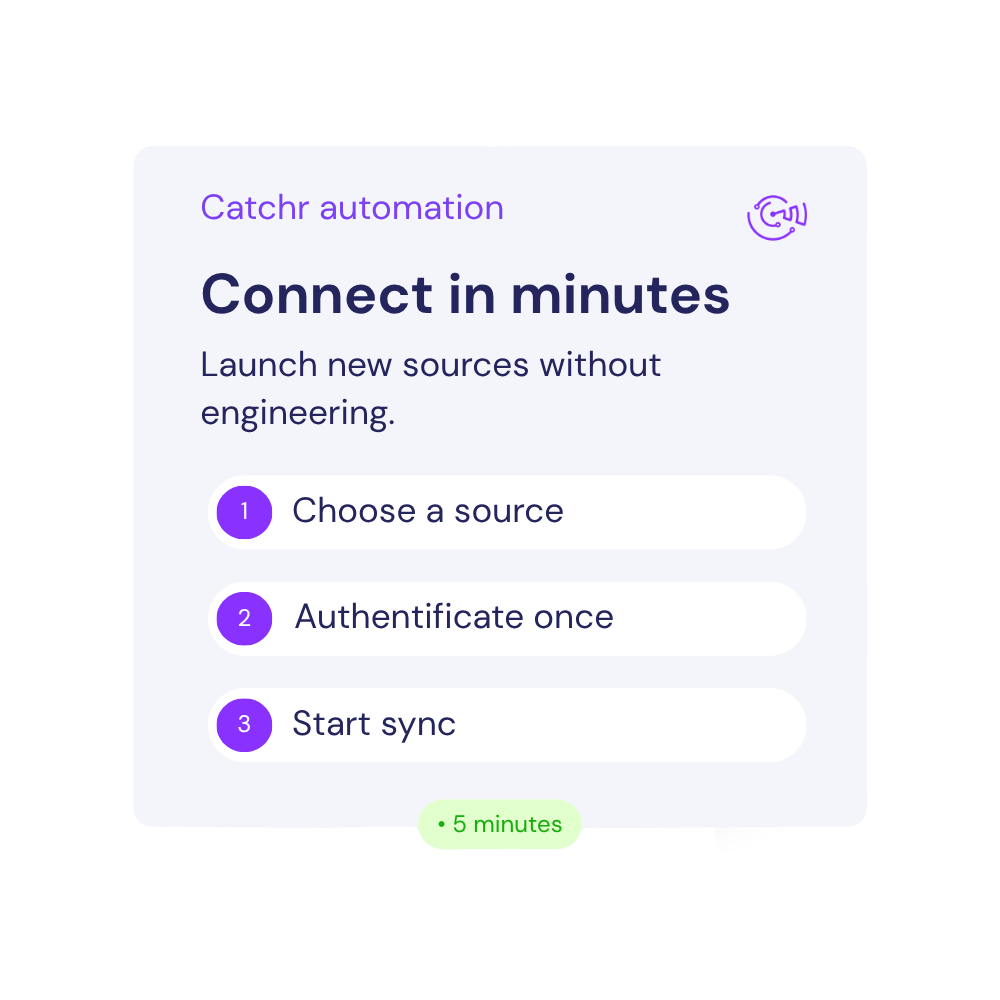
How to connect Google Play Review to ChatGPT ?

Three steps to your first source-aware prompt.

Step one

Authorize the Google Play Review account in Catchr

Select Google Play Review, sign in, and choose the client or business accounts you want to connect.

Client A · Connected sources
5 sources ready
Meta Ads 3 advertising accounts Connected
Google Ads 2 advertising accounts Connected
Google Analytics 4 1 web property Connected
HubSpot 1 CRM portal Connected
Step two

Add the Catchr MCP from official ChatGPT store

Configure the Catchr remote MCP connection in ChatGPT using the connector details from Catchr.

Step three

Choose, adapt, and run a prompt.

Replace account, period, KPI target, and threshold variables before you ask ChatGPT.

A simple client question should not trigger an hour of data prep.

“Why did CPA rise?” sounds simple. The answer is usually buried across exports, formulas, filters, and tabs before the analysis can even start.

Pull another CSV

Choose the right account, date range, breakdowns, and fields. Then wait for the file and do it again when the question changes.

Rebuild the context

Rename columns, fix formats, join tabs, and check formulas before you can trust the comparison.

Summarize it by hand

Turn the numbers into a client-ready answer, then repeat the whole process for the inevitable follow-up.

Ask the account. Get to the explanation.

Catchr MCP gives ChatGPT access to the marketing accounts you select, so each follow-up starts with the same marketing context instead of a new manual export.

The hard way

Prepare data before every question.

  • Export files from the marketing platform
  • Reformat and reconcile columns
  • Rebuild the analysis for each follow-up
The Catchr way

Connect once. Keep asking.

  • Select the right accounts and data
  • Ask in the language your team already uses
  • Investigate with follow-up questions

Twelve Google Play Review prompts for analyzing real account data.

Choose your role, open a workflow, then replace the bracketed variables before pasting the prompt into ChatGPT. Every prompt asks for evidence, limits, and a concrete output.

Agency promptCopy prompt
Multi-App Reputation Triage
Using the Catchr MCP, pull Google Play Review data for [List of Client Account IDs] over [Recent Period] and compare it with [Baseline Period]. For each Account ID, use distinct Review ID values to count new reviews, calculate the average Rating, examine the 1-to-5-star distribution using Stars Count fields, and analyze Review Text for recurring praise and complaints. Flag clients below [Rating Target], clients whose average rating has fallen by more than [Decline Threshold], and accounts with an unusual rise in 1-star reviews or high-Helpful Votes complaints. Rank the accounts that need the consultant's attention today and give one evidence-based next action for each.
Client Google Play Reputation Brief
Using the Catchr MCP, analyze Google Play Review data for [Client Account ID] during [Reporting Period] versus [Previous Period]. Report distinct Review ID count, average Rating, Review Count, the Stars Count distribution, and trends by Review Date. Summarize the leading positive themes, negative themes, and newly emerging issues from Review Text, treating themes and sentiment as inferred analysis rather than source fields. Produce a client-ready brief with key wins, risks, three prioritized product or support actions, and the Review URL for each urgent example.
Cross-Client Critical Review Queue
Using the Catchr MCP, retrieve Google Play Review records for [List of Client Account IDs] from [Recent Period]. Build a cross-client action queue using Account ID, Review ID, Review Date, Rating, Review Text, Helpful Votes, Reviewer Name, and Review URL. Prioritize reviews that match [Priority Rules, e.g., Rating at or below 2, Helpful Votes above a threshold, or a specified complaint theme], explain the evidence behind each priority, recommend the appropriate product, support, or reputation-management response, and finish with urgent and standard item counts by client.
Daily Client Review Priority List
Using the Catchr MCP, pull Google Play Review records for [List of Client Account IDs] from [Recent Period] and compare each account with [Baseline Period]. For every Account ID, count distinct Review ID values, calculate average Rating, and scan Review Text for urgent or repeated issues. Apply [Client Rating Targets and Priority Rules], giving extra weight to recent low-Rating reviews with high Helpful Votes. Rank the clients I should handle today and provide the evidence, Review URL, and first recommended action for every priority item.
Monthly Google Play Client Report
Using the Catchr MCP, pull Google Play Review data for [Client Account ID] for [Reporting Period] and [Previous Period]. Report distinct Review ID count, Average Rating or a Rating-derived average, Review Count, the Stars Count distribution, and trends by Review Date. Summarize the main positive and negative themes inferred from Review Text, identify the most consequential reviews using Helpful Votes, and write a client-ready report in plain English covering what improved, what declined, the evidence behind each conclusion, and three priorities for [Next Period] with relevant Review URLs.
Client Review Response Pack
Using the Catchr MCP, retrieve Google Play Review records for [Client Account ID] over [Recent Period] that match [Response Rules, e.g., Rating at or below 3 or Helpful Votes above a threshold]. Use Review ID, Review Date, Rating, Reviewer Name, Review Text, Helpful Votes, and Review URL to order them by severity and likely visibility. For each review, summarize the issue, draft a concise empathetic public response for client approval without promising an unconfirmed fix, and recommend the internal follow-up. Finish with a short client update showing completed drafts, unresolved product themes, and the next action.
Mobile Storefront Reputation Pulse
Using the Catchr MCP, pull Google Play Review data for [E-commerce App Account ID] over [Period] and compare it with [Comparison Period]. Use distinct Review ID values, Rating, Average Rating, Review Count, Stars Count - 1 Star through Stars Count - 5 Stars, and Review Date to show whether the app's review volume and reputation are improving or declining. Highlight material changes against [Rating Target and Change Thresholds], explain the Review Text themes driving them, and recommend the three most important actions for the e-commerce app team without claiming any sales or conversion impact that is not present in the review data.
Shopping Journey Friction Miner
Using the Catchr MCP, analyze Google Play Review records for [E-commerce App Account ID] over [Period]. Filter to [Low-Rating Definition, e.g., Rating at or below 3], then classify Review Text into inferred shopping-friction themes such as sign-in, browsing, search, cart, checkout, payment, delivery tracking, returns, or app stability only when the text supports them. Rank each theme by distinct Review ID count, average Rating, Helpful Votes, and change versus [Previous Period]. Separate recurring problems from isolated comments and return a prioritized corrective-action backlog with supporting Review URLs.
Release Feedback Impact Check
Using the Catchr MCP, pull Google Play Review data for [E-commerce App Account ID] from [Days Before Release] before to [Days After Release] after [Release Date]. Compare distinct Review ID volume, average Rating, the 1-to-5-star distribution, and Review Text themes before and after the release using Review Date. Identify complaints or praise that first appeared or materially increased after [Release Date], weight high-Helpful Votes reviews in the priority assessment, and produce a release follow-up plan with issue severity, supporting Review URLs, recommended owner [Product, Engineering, Support, or Other], and next validation step. State that the timing is an association, not proof that the release caused the change.
Google Play Review Data Integrity Audit
Using the Catchr MCP, audit Google Play Review data for [Account ID or All Connected Accounts] over [Period]. Check completeness and consistency across Account ID, Review ID, Review Date, Rating, Average Rating, Review Count, Helpful Votes, Reviewer Name, Review Text, Review URL, Extracted Date, and the five Stars Count fields. Flag duplicate Review ID values within an Account ID, missing required values, ratings outside [Valid Rating Range, e.g., 1 to 5], negative counts or Helpful Votes, Extracted Date earlier than Review Date, and conflicting records sharing the same Review ID. Return an exception table with account, review, failed rule, observed value, severity, and recommended validation step.
Rating Trend and Anomaly Monitor
Using the Catchr MCP, pull Google Play Review data for [Account ID or All Connected Accounts] over [Lookback Period]. By Account ID and [Day or Week], calculate distinct Review ID volume, average Rating, low-rating share from Rating or Stars Count - 1 Star and Stars Count - 2 Stars, and Helpful Votes. Compare each measure with a [Trailing Baseline Window] and flag deviations above [Statistical or Percentage Threshold]. Distinguish probable extraction or duplication issues using Extracted Date and Review ID from genuine feedback shifts supported by Review Text, and return both an account-level alert summary and the record-level evidence with Review URLs.
Feedback Taxonomy Validation
Using the Catchr MCP, analyze Google Play Review data for [Account ID or All Connected Accounts] over [Period] using Review ID, Review Date, Rating, Review Text, Helpful Votes, and Review URL. Apply [Proposed Theme and Sentiment Taxonomy] to Review Text, clearly labeling theme and sentiment as derived fields. Measure theme frequency, average Rating, low-rating share, and Helpful Votes by Account ID; flag empty or insufficient text, overlapping classifications, uncategorized reviews, and rating-sentiment disagreements based on [Validation Rules]. Return taxonomy coverage metrics, a prioritized set of categories to refine, and a stratified review sample for human validation.
Replace [variables] Facts ≠ hypotheses Action + follow-up metric

Google Play Review to ChatGPT FAQs

Clear answers for marketers comparing connectors, data sources, reporting workflows, and dashboard setup.

What Google Play Review data can ChatGPT analyze through Catchr?

ChatGPT can query connected Google Play Review data for ratings, review text, reviewer context, replies, languages, and review-volume reporting.

Representative measures include Average Rating, Review Count, Rating, Helpful Votes, and Stars Count - 1 Star. Useful breakdowns include Review Date, Reviewer Name, Review Text, Review URL, and Date. The exact field set depends on the selected dataset and compatible reporting reporting level.

How granular can Google Play Review analysis be in ChatGPT?

The available detail depends on the fields returned for the selected dataset. Useful breakdowns include Review Date, Reviewer Name, Review Text, Review URL, and Date.

Ask ChatGPT to state the reporting level it used and keep incompatible levels separate before calculating totals, rates, or comparisons.

Can ChatGPT summarize recurring customer themes in Google Play Review?

Yes. ChatGPT can group feedback into recurring strengths, friction points, and issues that need human review. Relevant fields include Average Rating, Review Count, Rating, Helpful Votes, and Stars Count - 1 Star.

Set the business target, comparison period, and minimum volume before requesting priorities or recommendations.

Can ChatGPT compare reputation across locations, markets, or periods in Google Play Review?

Yes. ChatGPT can compare rating distribution, review volume, themes, and reply coverage across consistent scopes. Useful breakdowns include Review Date, Reviewer Name, Review Text, Review URL, and Date.

Ask it to separate observed data, possible explanations, and the next validation step so an unusual value is not presented as a proven cause.

What types of prompts work best for Google Play Review analysis?

Strong prompts name the action, account or entity, date range, comparison, and KPI or threshold.

  • Monitor: “Mobile Storefront Reputation Pulse”
  • Diagnose: “Google Play Review Data Integrity Audit”
  • Find opportunities: “Shopping Journey Friction Miner”
  • Report: “Monthly Google Play Client Report”

Can I combine Google Play Review with other data sources in ChatGPT?

Yes, when the other sources are also connected to Catchr. Useful combinations include commerce, CRM, support, local, or advertising sources.

Align dates, currencies, identifiers, and definitions first. If the sources cannot be joined reliably, ask for a side-by-side comparison rather than a single attributed result.

Can I analyze multiple Google Play apps together?

Yes, provided each one is connected and available through Catchr MCP. Ask for separate results first, then create the combined view.

Specify the rating scale, location or market, language, period, and minimum review volume. This keeps one large entity or a definition mismatch from distorting the comparison.

What do I need to connect Google Play Review to ChatGPT with Catchr?

You need access that can authorize and view the relevant Google Play Review data, a Catchr workspace with the source connected, and Catchr MCP enabled in ChatGPT.

After selecting the required entities, you can ask questions in natural language without preparing a new CSV export for each analysis.

How recent is the Google Play Review data, and how much history can I analyze?

ChatGPT analyzes the records returned through the connected Catchr source; it should not assume the data is real time. Freshness and historical coverage can vary by dataset, field, selected period, and source API limits.

Ask it to state the latest review date and the latest extraction date when available, together with the timezone, requested period, and any missing intervals before interpreting a trend.

Can ChatGPT change anything in Google Play Review through Catchr?

No. Catchr MCP provides Google Play Review data for analysis; it does not give ChatGPT permission to publish replies, edit reviews, or change the source listing.

Use the result to prepare an action plan, then make operational changes in Google Play Review. Review the supporting figures before acting on the recommendation.

How much does it cost to connect marketing data to ChatGPT with Catchr?

Catchr MCP is included in every standard plan—there is no separate fee for the ChatGPT integration. The Starter plan begins at $20 per month when billed annually, or $24 when billed monthly.

It includes 3 platforms, 10 accounts, unlimited users, and unlimited requests. Larger plans increase the number of platforms and accounts available. See Catchr pricing

‍Can I try the ChatGPT integration before choosing a plan?

Yes. Catchr offers a 14-day free trial with no credit card required.

You can use the trial to connect your marketing sources, authorize Catchr MCP in ChatGPT, and test questions using your own data before subscribing.

Still have a question ? 

Our teams is always here to responds to any question you could have about our data connector. 

Ask the account question before building another export.

Connect yout marketing platform to ChatGPT with Catchr MCP and start investigating current campaign performance.

14 days free-trial
No credit-card required
100+ sources